
 Home
Home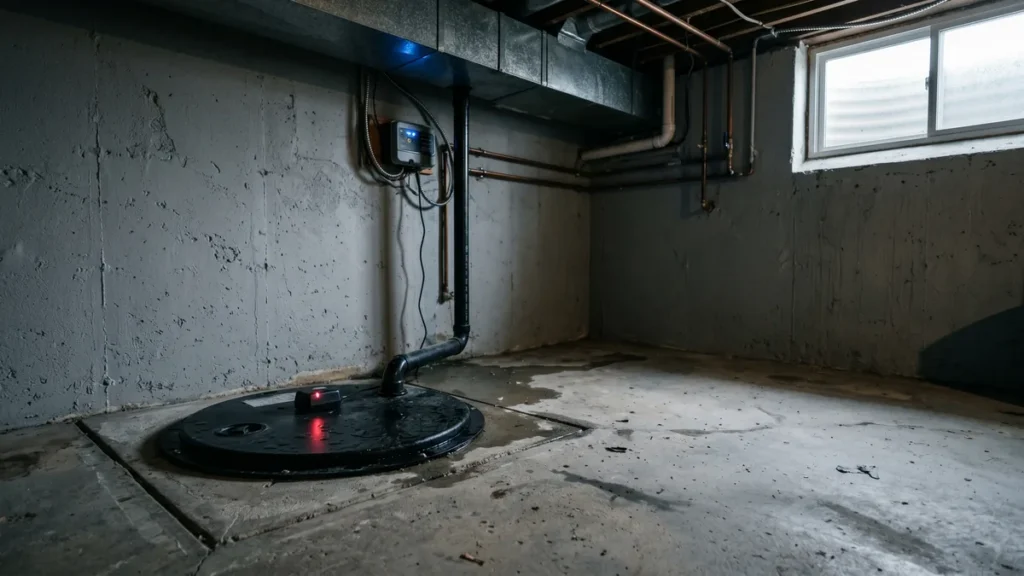
Last updated: August 15, 2026
In this guide
A sump pump alarm going off at 2 a.m. is the basement equivalent of a smoke detector chirping over the stove. You snap awake, your brain catches up, and now you have a decision to make. The good news is that in roughly seven out of ten cases, a homeowner can identify the cause in five minutes without touching anything that requires a license. The other three cases need a professional. This guide tells you which is which. If your basement is already taking on water, skip ahead and call our emergency basement leak repair team; we are on call across Toronto and the GTA.
Most GTA homes use a high water alarm tied to a float switch in the sump pit. When the water level climbs above where the pump should have kicked in, the alarm triggers. That tells you the pump did not run, ran but cleared nothing, or cannot keep up with how fast water is entering. Each of those points to a different cause, and a few of them are easy fixes. We will walk through them in the order a professional would check them.
Sump pump and basement drainage issues can involve electrical and water risks. If standing water is touching the outlet, breaker box, or extension cord, shut off power at the breaker panel before going near the pit. If you are unsure, consult a licensed plumber or electrician. This article is general guidance, not professional advice.
What the alarm is actually telling you
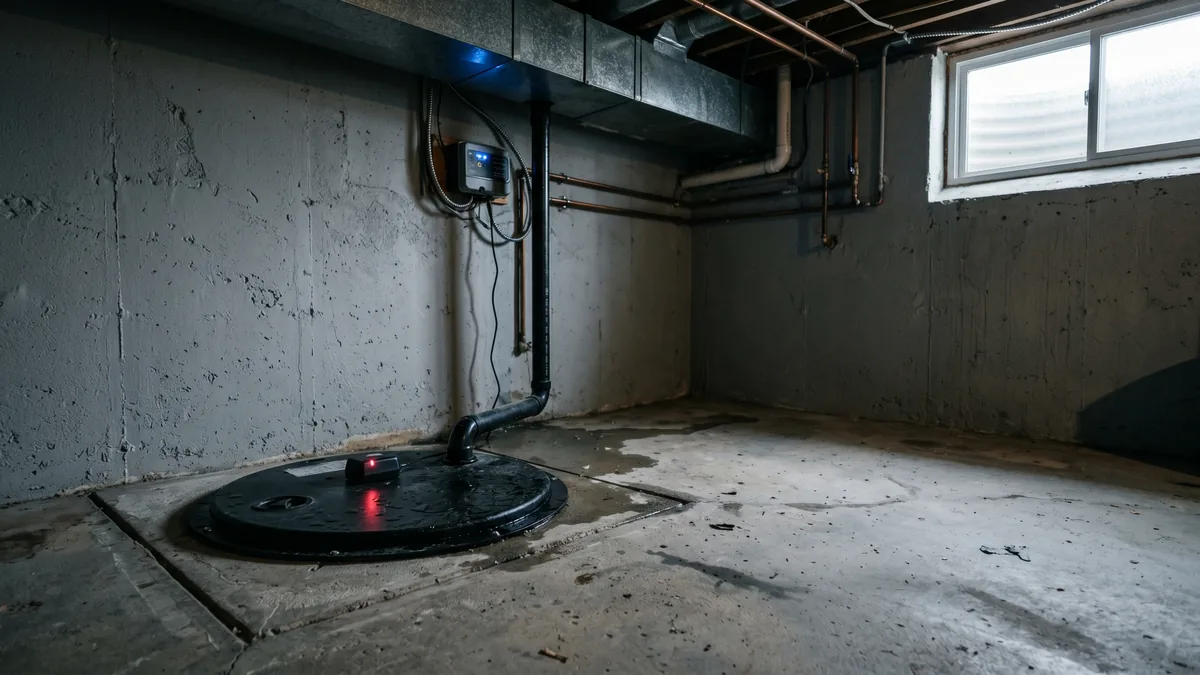
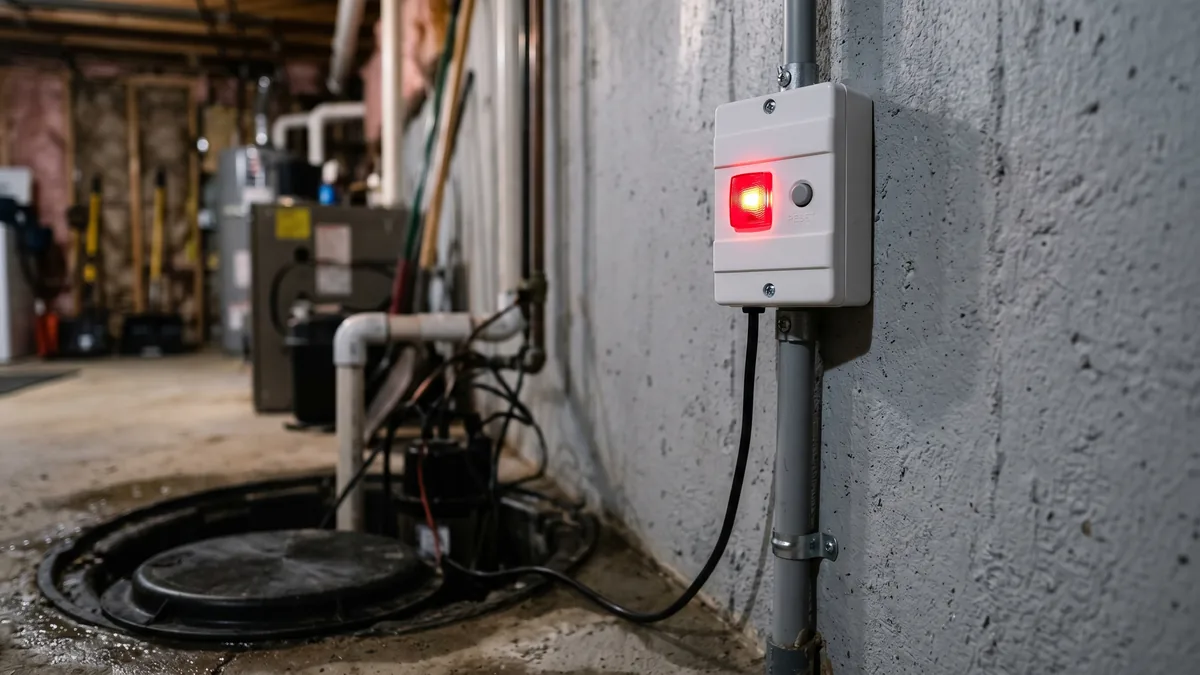
Sump pump alarms in Ontario homes fall into three rough categories, and identifying which one you have narrows the cause fast. Read the label on the alarm box or the manual that came with the system. If you do not have either, the alarm location and the colour of the indicator light usually tell you.
- High water alarm. The most common type in GTA homes. A second float sensor mounted in the pit, set above the normal pump-on level. When water reaches it, the alarm sounds. This is the kind that tells you the pump did not handle the load.
- Pump failure alarm. Built into the pump controller. It monitors run time or motor current. If the float calls for the pump and the motor does not respond, the alarm trips.
- Power loss alarm. Built into battery backup systems. AC power to the primary pump is interrupted, so the backup has taken over.
A modern integrated system, like the kind we install through our sump pump installation and maintenance service, often has all three alarms wired through one controller. Older standalone alarms in homes built before the mid-1990s usually have only the high water version. That matters because a power loss alarm is rarely an emergency; a high water alarm during heavy rain often is.
Did you know?
Toronto and Region Conservation Authority data shows that more than 65% of GTA basement flooding insurance claims start with a sump pump that either failed mechanically or lost power during a storm. A working high water alarm cuts the average claim value by roughly half because homeowners catch the failure before saturation reaches finished flooring.
The first five minutes: a homeowner checklist
Before you do anything, glance at the basement floor. Is there standing water anywhere? If yes, do not step into it until you confirm the breaker for the pump is off and there is no live electrical cord in the water. Once you have cleared that safety check, work through this sequence. It mirrors what an experienced technician does on a service call.
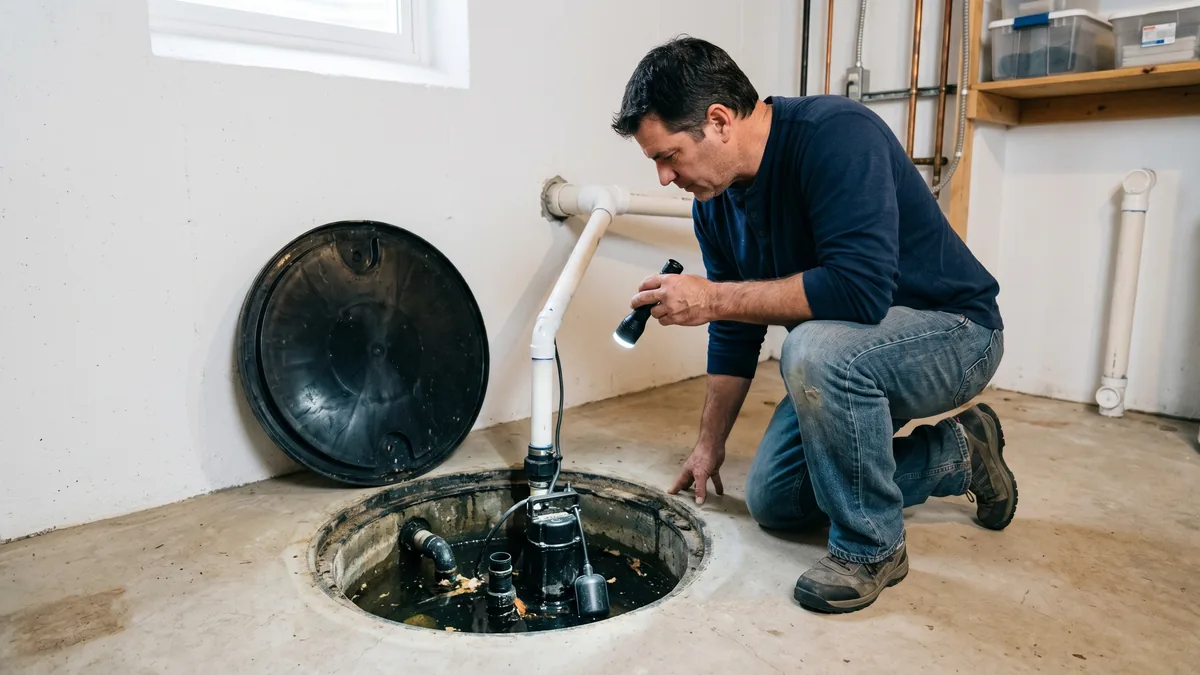
- Look at the pit through the lid. Is the water level high but the pump silent? That is a pump issue. Is the pump running but the water is not going down? That is a discharge issue.
- Listen. A healthy pump cycles on for 10 to 30 seconds, sounds smooth, and shuts off. A grinding noise, a steady hum without water movement, or a rapid clicking all point to specific problems.
- Check the outlet. Is the pump plugged in? Is the GFCI on the receptacle tripped? Vibration from years of use loosens cords. A two-second push of the cord back into the outlet has fixed more alarms than any other action.
- Check the breaker panel. Locate the breaker labelled for the sump pump. If it is tripped, flip it fully off then back on. If it trips again immediately, stop, leave it off, and call a licensed electrician.
- Confirm battery backup status. If you have one, the controller will show whether AC power is on, whether the battery is charged, and whether the backup pump has run.
If the five-minute check did not solve it, the cause is almost always one of three things: a stuck float switch, a blocked discharge line, or a dead pump motor. Each gets its own section below.
When the float switch is the problem
The float switch is a plastic float on a tether or vertical rod. When the water in the pit rises, the float rises with it and closes a contact that tells the pump to run. When water drops, the float falls and the contact opens. Two failure modes account for most stuck-float alarms.
The float is wedged against the basin wall
In a tight pit, especially the 18-inch basins that older Toronto homes were built with, a tethered float can rotate on its cord and get pinned against the pump body or the basin liner. The water rises, the float cannot rise with it, and the alarm fires. Open the lid carefully, look in with a flashlight, and gently free the float by hand or with a wooden dowel. Never reach into a flooded pit without confirming the breaker is off.
The float is fouled by debris
Iron ochre, silt, and pieces of weeping tile sediment build up in the pit over the years. They coat the float, stick the contact open or closed, or stop the float from moving freely. A pit that has not been cleaned in five years is overdue. Pumps fail twice as often in dirty pits as in clean ones. We document this on every site visit through our interior waterproofing service, and it is a routine annual maintenance item.
Pro tip
If your pit has a tethered float, swap it for a vertical float switch on your next service visit. Vertical switches cannot rotate, do not pin against the basin wall, and fail less than half as often in the small basins typical of pre-1990 Toronto homes. The upgrade runs $80 to $140 in parts and adds maybe 20 minutes of labour during a routine inspection.
When the discharge line is the problem
If the pump is running but the alarm is still on, water is not leaving the pit fast enough. The cause is almost always somewhere in the discharge line: the pipe that carries water from the pump up and out of the house. Three failure points show up in our service calls more than any others.
Frozen exterior discharge in winter
The pipe daylights through an exterior wall and drops to grade. In a Toronto February, that last few feet of pipe can ice over solid. The pump runs, builds pressure, opens the check valve, and the water has nowhere to go. It falls back into the pit through the relief hole the installer drilled in the pipe just above the pump. The pump runs again. The cycle repeats and the alarm fires.
Step outside and look at the discharge outlet. If you see ice forming around it or icicles dripping from it, the line may still be flowing partially. If the outlet is sealed with ice, you have a freeze. Pour warm water on the exterior pipe and the area around the outlet to start thawing. Do not use an open flame. If freezes are recurring, the line needs to be re-pitched or insulated, and that is a job for a professional.
Failed check valve
The check valve sits in the discharge line above the pump and stops water from falling back into the pit when the pump shuts off. When it fails, every pump cycle moves water up the pipe and then lets most of it fall right back. The pit fills again immediately, the pump cycles continuously, and the alarm sounds because the system cannot keep up. You can hear a failed check valve, it makes a distinct clanking sound when the pump stops. A new check valve runs $20 to $60 in parts, and any plumber can swap it.
Blockage inside the pipe
Debris from the pit, sediment buildup over a decade, or a small animal can lodge in the discharge line. The pump runs, hits the blockage, and stalls. A plumber clears it with a snake or by sectioning the pipe. If the line is original to the house and over 25 years old, plan a replacement; corrosion eventually makes blockages a yearly event.
Save your money
A working sump pump costs $300 to $700 installed. A flooded basement runs $8,000 to $40,000 to dry, demolish, and rebuild in the GTA in 2026. The math on annual maintenance, $150 to $250 in most cases, is the easiest spend in the household budget. Combine it with a battery backup test and your odds of an overnight failure drop sharply. The team that handles sump pump installation and replacement across Toronto and the GTA can tune yours during a single visit.
Power, GFCI, and battery backup
If the pump is silent and the float is free, the issue is electrical. Walk through these checks in order before assuming the pump is dead.
- Outlet check. Confirm the cord is plugged in fully. If there is a GFCI receptacle on the wall, press the test button then the reset button. A tripped GFCI is the most common cause of a silent pump.
- Breaker check. Find the sump pump breaker in the panel. It should be on a dedicated circuit per the Ontario Building Code. If it has tripped, reset it once. If it trips again, leave it off and call an electrician. Repeated trips mean a fault in the pump motor or the wiring.
- Battery backup status. If you have a backup, the controller display tells you what state the system is in. A green light usually means AC power is good and battery is charged. A red or amber light means something needs attention. A backup that has been running on battery for hours has likely discharged below the level needed to start the pump again.
The Electrical Safety Authority requires that sump pumps in Ontario be on a dedicated GFCI-protected circuit. If your pump is sharing a circuit with a freezer or any other appliance, that is a code issue and should be corrected. We see this often in older homes where the pump was added decades after the panel was wired.
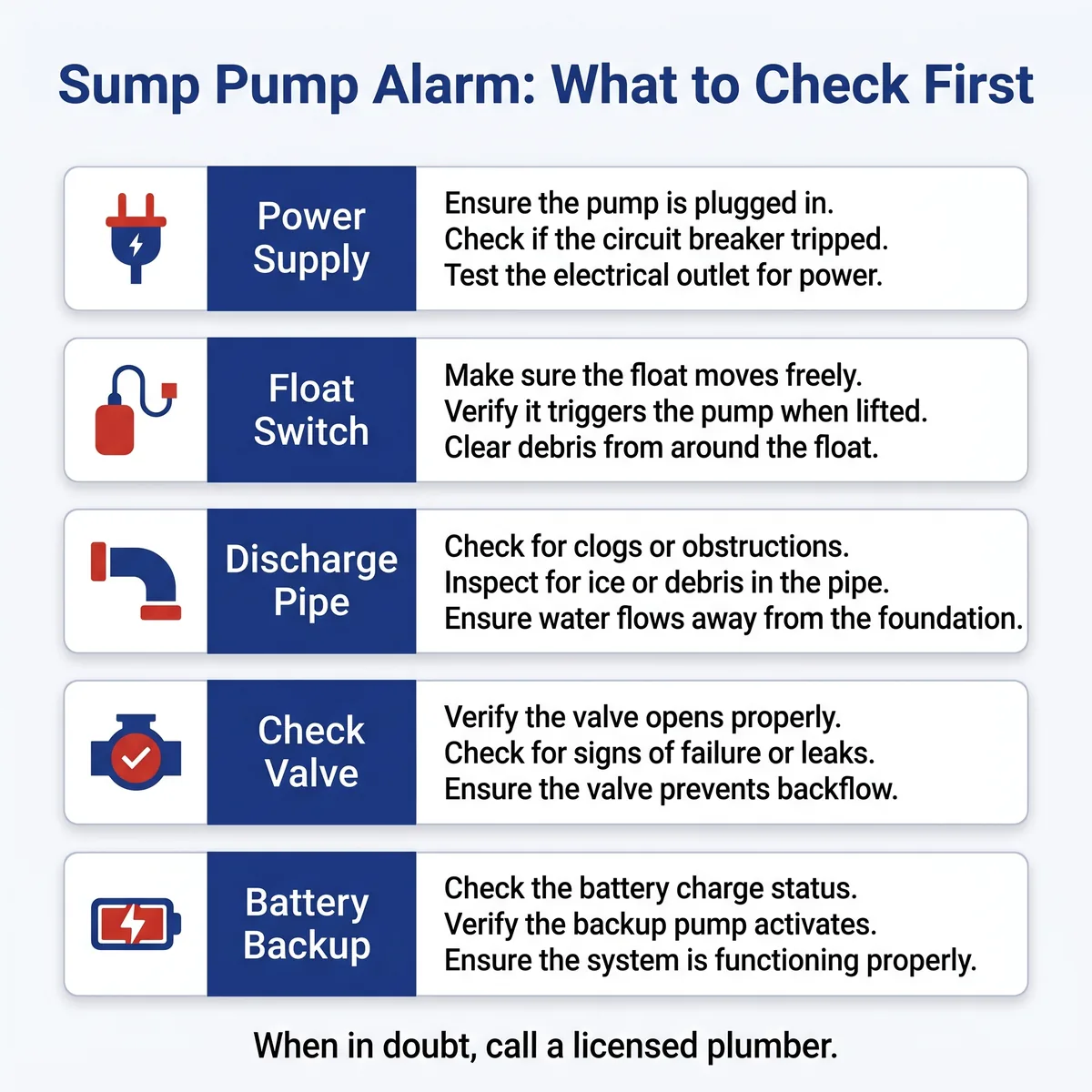
Download the sump pump alarm quick guide PDF (one-page reference, print and tape it to the wall near your pit). Verified against Ontario Building Code Part 9 and Electrical Safety Authority requirements.
When to stop and call a professional
Six conditions move you out of homeowner-fix territory and into licensed-professional territory. If any of these are true, stop troubleshooting and call.
- Standing water in the basement is touching electrical components, outlets, or extension cords.
- The breaker for the pump trips repeatedly when reset.
- You smell burning insulation or see scorch marks at the outlet or pump body.
- The pit fills faster than the pump can empty it (water still rising with pump running).
- Pump has been running constantly for more than 20 minutes.
- The discharge line has a hard freeze that warm water cannot clear, or has burst inside the basement wall cavity.
For everything else, the homeowner checks above usually identify the cause. If you want a second opinion or a professional inspection scheduled before storm season, the team at DGI handles emergency callouts across Toronto, Mississauga, Vaughan, and the surrounding GTA. We will inspect the pump, the alarm, the discharge line, and the battery backup, and tell you in writing what needs work and what does not.
How to prevent the next alarm
Most alarms we respond to could have been avoided with three habits. None of them takes more than half an hour a year, and they will outlast most pumps.
- Test the pump every three months. Pour a five gallon bucket of water into the pit. The pump should start within a few seconds, run cleanly, and shut off when the float drops. If anything is off, address it before the next storm.
- Clean the pit once a year. Unplug the pump, lift it out, and vacuum the silt and stones from the bottom of the basin. Wipe the float. Inspect the discharge fittings for corrosion.
- Replace the battery backup every three to five years. Sealed lead-acid batteries die quietly. A backup that has not been tested in a year may have less than 30% capacity left. Lithium replacements last longer but cost more upfront.
Beyond that, age out the primary pump every 8 to 12 years even if it still runs. The motor windings degrade. The impeller wears. The mounting hardware corrodes. A 15-year-old pump that has never failed is the one most likely to fail tonight. Replacement is cheaper than the wet drywall and ruined storage that comes with the failure.
If a recent home insurance renewal asked about your sump system, that is a clue. Insurance carriers are pricing risk on pump age in Ontario. A documented annual inspection often shaves the basement-water rider on a policy.
People often ask
Can I just turn the alarm off and deal with it in the morning? Only if you have verified there is no water rising in the pit. Silencing an alarm without checking the cause is how a slow failure becomes a flooded basement. Most modern alarms have a snooze function that resounds in 30 to 60 minutes, which gives you time to check the pit safely without ignoring the warning entirely.
Frequently asked questions
Why does my sump pump alarm keep going off during heavy rain?
During heavy rain, water enters the pit faster than during normal conditions. If the pump cannot keep up, the float for the high water alarm trips. The most common causes in this situation are a partial discharge line blockage, an undersized pump for the property, or a check valve that is leaking water back into the pit. A pump rated for the soil and grade conditions of a typical GTA lot should clear at least 40 gallons per minute. If yours is rated lower, it may not handle a real storm.
My alarm went off but the pump is running, why?
This usually means the pump is working but cannot move water out fast enough. Three likely causes: a frozen or blocked discharge line, a failed check valve recycling water back into the pit, or a pump that has worn impellers and is moving less water than it used to. Step outside and look at the exterior discharge outlet. If water is not coming out, the line is the issue. If water is coming out but the pit is still high, the pump is the issue. Either way, plan a professional inspection within the next 48 hours, because the alarm means the system is at its limit.
How long can a sump pump alarm run on battery backup during a power outage?
It depends on the battery capacity and how often the pump cycles. A standard 12V deep-cycle marine battery in good condition powers a backup pump for roughly six to eight hours of light cycling or two to four hours of heavy cycling. Lithium iron phosphate batteries extend that to 10 to 16 hours under the same loads. If a power outage looks like it will last more than the battery rating, plan for a portable generator with a properly wired transfer switch, or expect to bail manually.
Can a sump pump alarm be a false alarm?
It can, but treat it as a real alarm until you verify otherwise. False alarms come from a stuck high water float, a corroded contact, a low-voltage alarm battery, or condensation inside the alarm housing in older units. None of those are common in alarms less than five years old. If you confirm the water in the pit is well below the pump-on level and the pump is operating normally, you can reset the alarm and book a service visit to find the source of the false trigger.
When should I replace my sump pump entirely versus fixing the alarm?
Replace the pump if it is more than 10 years old, if it has failed twice in the last two years, if the motor is grinding or vibrating noticeably, or if you can see corrosion at the discharge fitting. Repair the alarm only if the pump is otherwise healthy and the alarm itself is the issue. In a 12-year-old system, replacing the pump usually means replacing the alarm and the check valve at the same time, because they are all approaching end of life together and labour is cheaper as a single visit.
Related reading
- Sump pump and battery backup buying guide for GTA homes
- What is a sump pump backup system, and do you need one?
- Common mistakes when choosing a new sump pump
- Why Toronto basements leak every spring (and what actually stops it)
An alarm tonight, a dry basement tomorrow
DGI Waterproofing services sump pumps, alarms, and battery backups across Toronto, Mississauga, Scarborough, Etobicoke, Vaughan, and the rest of the GTA. Emergency calls answered 24 hours a day. Routine inspections booked in five minutes.
References used in this article: Ontario Building Code Part 9 (residential drainage), Electrical Safety Authority of Ontario, Government of Canada flood preparedness guidance, and Toronto and Region Conservation Authority reporting on GTA flood risk.