
 Home
Home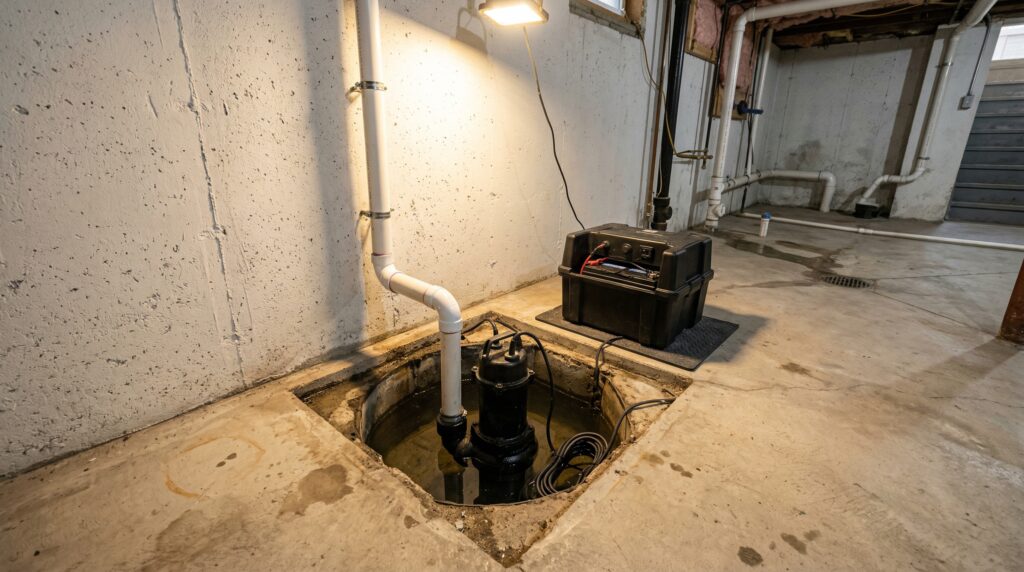
Last updated: August 15, 2026
If your Toronto basement has a sump pit, the pump in that pit is the only thing standing between your finished basement and ten thousand dollars of flood damage on the night the power goes out during a thunderstorm. Most GTA homes are running pumps that are undersized, ten years overdue for replacement, or have no backup at all. Here is how to spec a sump pump system that actually works when you need it, and what a sump pump installation job costs in 2026 from a real waterproofing contractor.
What a sump pump actually does
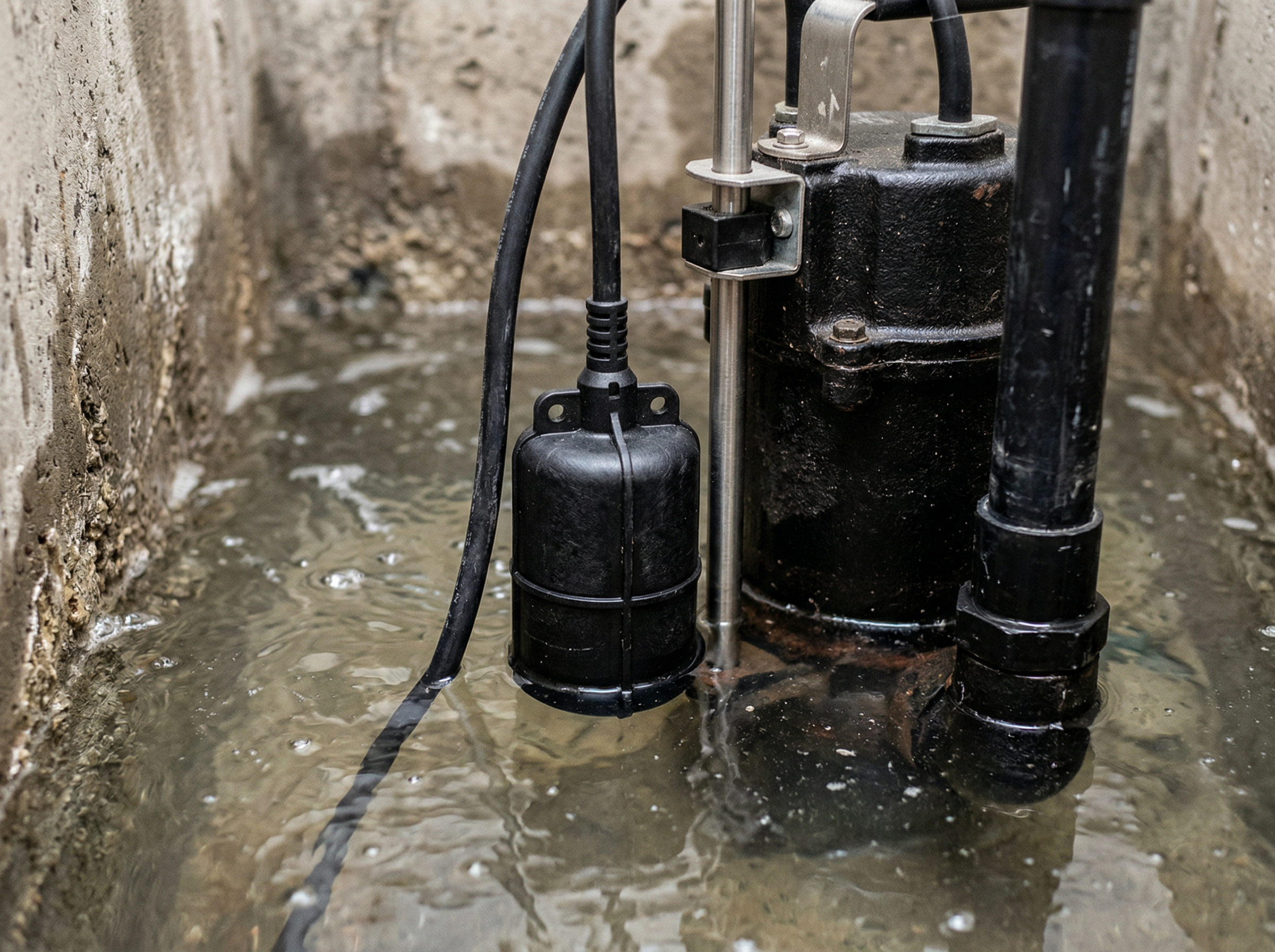
Groundwater that seeps through your foundation or weeping tile collects in a pit dug into the basement floor. When the water rises to a set level, a float switch turns on a submersible pump that ejects the water through a discharge pipe to the storm sewer or out into your yard, well away from the foundation. As long as the pump runs every time it should, your basement stays dry. The moment the pump fails or the power goes out during a storm, the pit overflows and the water comes up through your floor.
Primary pump sizing
The primary pump is the workhorse. Sizing it correctly comes down to two numbers: gallons per hour at the actual lift height of your house, and the discharge pipe diameter.
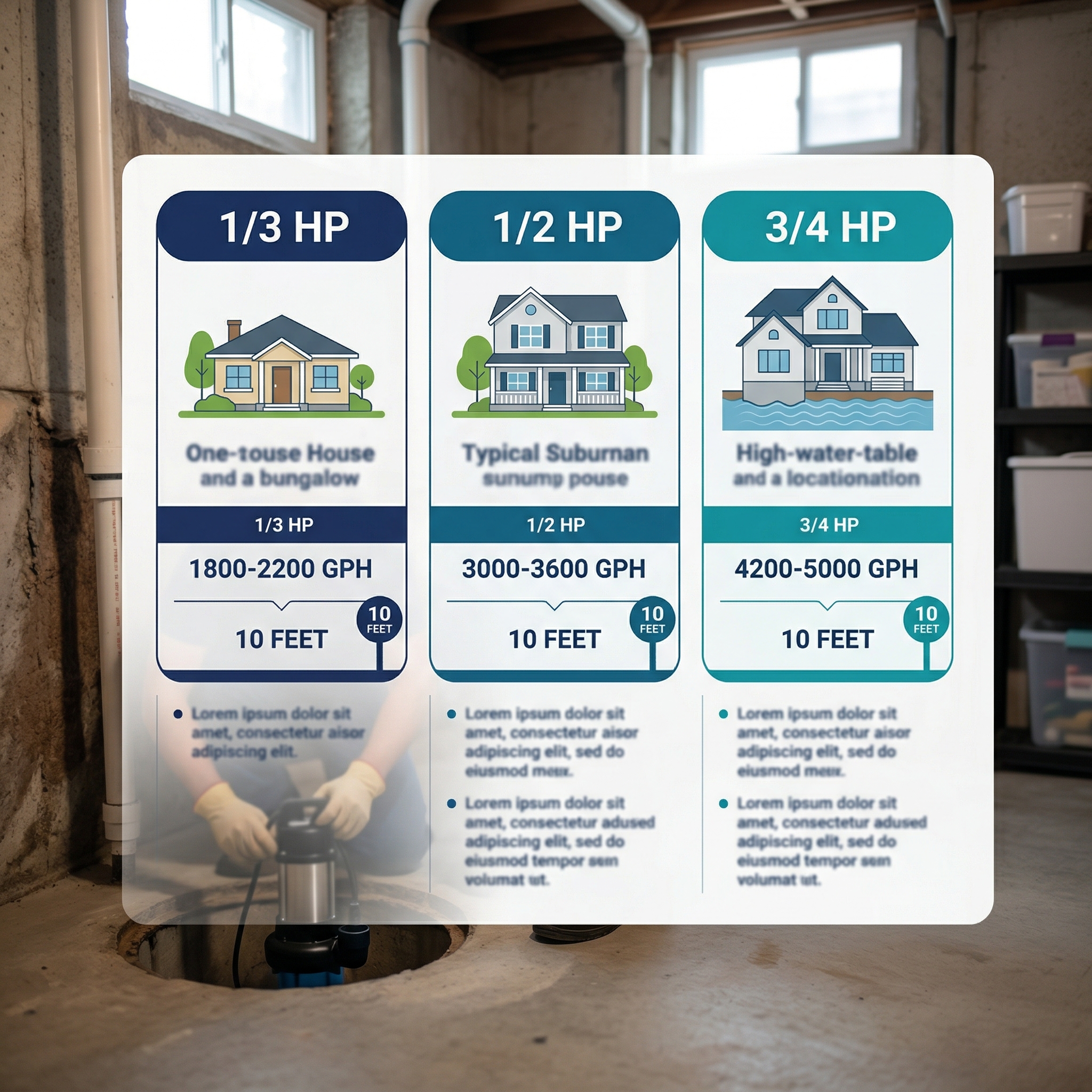
- 1/3 HP pump. Suitable for small Toronto bungalows on well-drained lots. Moves about 2,500 GPH at 10 feet of lift. The cheapest option and the one most builders install. Often undersized for finished basements.
- 1/2 HP pump. The right answer for most GTA two-storey homes with a finished basement. Moves about 4,200 GPH at 10 feet of lift. Handles spring melt and heavy storm cells without short-cycling.
- 3/4 HP pump. Required for high-water-table lots, large homes over 3,000 sq ft, or any home where the pump runs more than once every five minutes during a normal rainfall. Moves about 6,000 GPH at 10 feet of lift.
Cast iron housing pumps last twice as long as plastic in the same application. Spend the extra $80. A Zoeller M53 or M63, a Liberty 257 or 287, or a Wayne CDU790 in cast iron are all solid 1/3 to 1/2 HP options that we install regularly across the GTA.
Why every GTA basement needs a backup pump
Toronto Hydro statistics show that the average Toronto neighbourhood loses power for at least 4 hours per year, and almost every long outage happens during the exact same thunderstorm that is dumping water into your sump pit. The primary pump runs on house power. When the power goes out, the pit fills up in about 20 to 60 minutes depending on inflow rate, and then you have a flood. The backup pump is what saves the basement.
Battery backup option
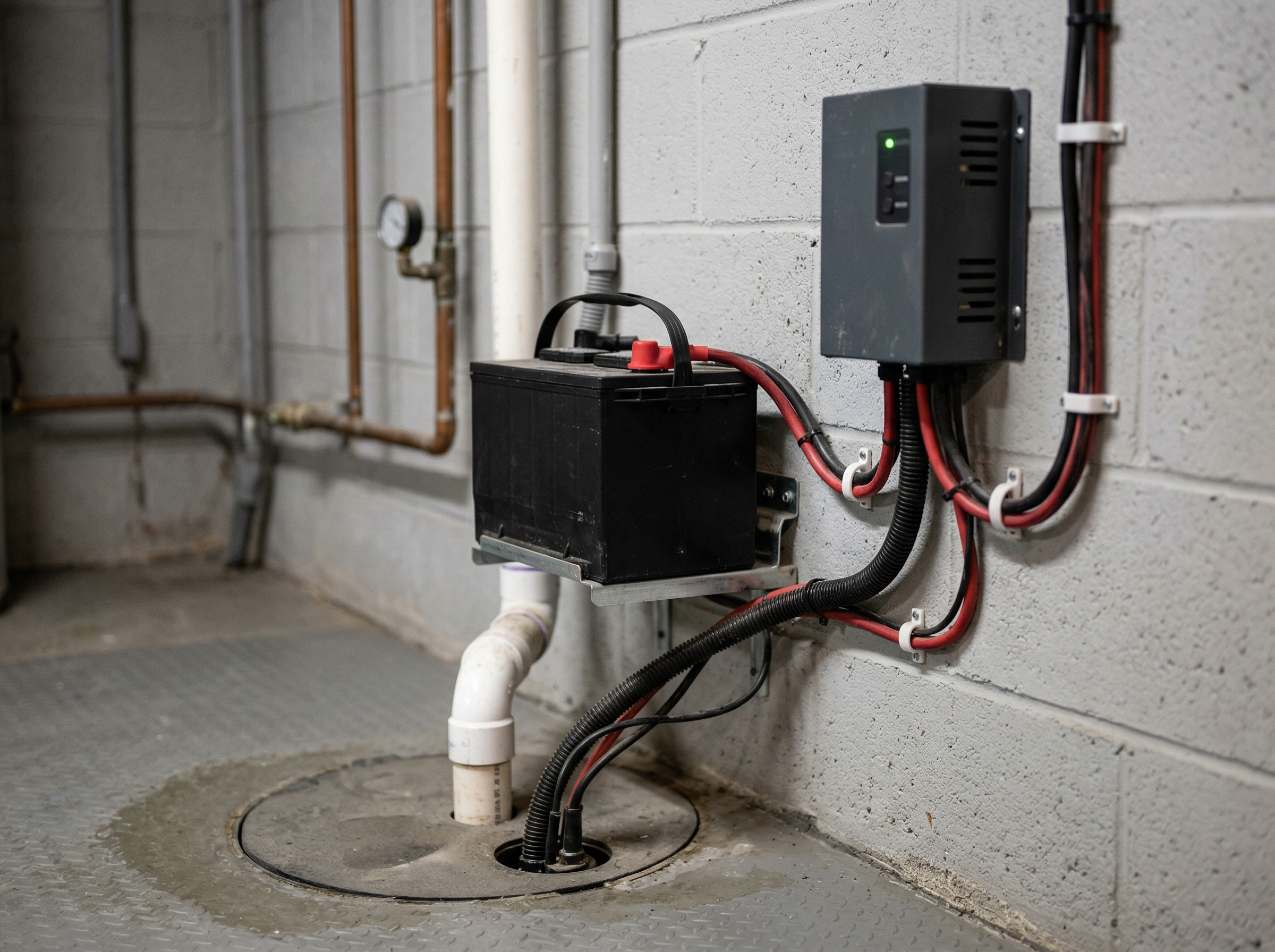
A 12 volt deep cycle marine battery wired to a dedicated DC backup pump is the standard GTA backup setup. A good system pumps 1,500 to 2,000 GPH for 6 to 8 hours on a fully charged battery. Watchdog Big Dog, Pentair PHCC Pro, and Liberty SJ10 are all proven units. The battery should be replaced every 3 to 5 years, the system tested twice a year, and the audible alarm checked every spring.
Water-powered backup option
A water-powered backup uses your municipal water supply as the energy source: city water pressure drives an ejector that pulls sump water up the discharge pipe. No battery, no electricity, runs as long as the city water keeps flowing. The downside is it needs at least 40 PSI of city pressure and uses about 1 gallon of municipal water for every 2 gallons of sump water it removes, so your water bill goes up during a long outage. Excellent option for vacation properties or homeowners who travel for extended periods.
What fails first on a GTA sump pump system
From 1,800 sump systems we have specced and installed, here is the failure order:
- Float switch. Tethered floats catch on the pit wall, vertical floats stick from sediment. Switch failures account for about 60 percent of pump failures we see. Solution: vertical switch design and an annual sediment cleanout.
- Backup battery degradation. Lead-acid batteries lose capacity faster than homeowners expect. A 5 year old battery may be at 30 percent capacity. Replace on a calendar schedule, not when the alarm goes off during a flood.
- Check valve leak. The check valve on the discharge pipe stops backflow into the pit. When it fails, the pump short-cycles and burns out. Inspect annually.
- Discharge line freeze. If the discharge runs above grade in winter, ice plugs the line. The pump runs against a closed pipe and burns out. Solution: discharge below frost line, or add a freeze relief valve.
- Pump motor itself. Cast iron submersible pumps last 8 to 12 years. Plastic pumps last 4 to 7 years.
What a proper sump pump install costs in 2026
Replacing the pump only, in an existing pit, with a quality cast iron 1/2 HP unit and new check valve: $650 to $1,100 in the GTA in 2026. Adding a battery backup with new battery, charger, and audible alarm: $900 to $1,600. New sump pit and pump installation in a basement that does not currently have one: $2,500 to $4,500 depending on concrete cutting and discharge routing. A full primary plus battery backup install on a new interior weeping tile system: $5,500 to $9,000.
Frequently asked questions
How often should I test my sump pump?
Twice a year. Every March before spring melt, and every September before fall storms. Pour a five gallon bucket of water into the pit, watch the pump kick on, and confirm water exits the discharge. Test the battery backup by unplugging the primary and repeating.
How long will the battery backup run during an outage?
A fully charged 75 amp-hour deep cycle marine battery runs a 12V backup pump for 6 to 8 hours of intermittent operation, longer if the pit is filling slowly. Two batteries wired in parallel doubles that. For long outages, water-powered backups run indefinitely.
Can I install a sump pump myself?
Replacing an existing pump in an existing pit is a doable DIY job for handy homeowners. Cutting a new pit through a finished basement floor and routing a code-compliant discharge to the storm sewer is a job for a plumber and a waterproofing crew working together. Ontario Building Code Section 7 covers discharge routing requirements.
Should I discharge to the storm sewer or to my yard?
Toronto bylaw allows both with conditions. Discharge to your yard must terminate at least 1.8 metres from the foundation, away from neighbouring property, and not into a city right-of-way. Storm sewer connection is preferred where available because it cannot freeze. Sanitary sewer connection is illegal in Toronto for sump pump discharge.
What if my pump never runs even in spring?
Either your home does not need it (high lot, well-drained soil, no foundation drainage tied in), or the float switch is stuck open. Test it with a bucket of water before you assume it is fine.
Get the right pump and backup before next storm season
An undersized or unbacked sump pump is the cheapest and most expensive piece of equipment in your basement at the same time. The pump itself is $300. The flood it lets through during the next outage is $30,000. request a free inspection and we will measure your pit, calculate your inflow rate, and spec a primary plus backup system that will actually keep up on the worst night of the year.