
 Home
Home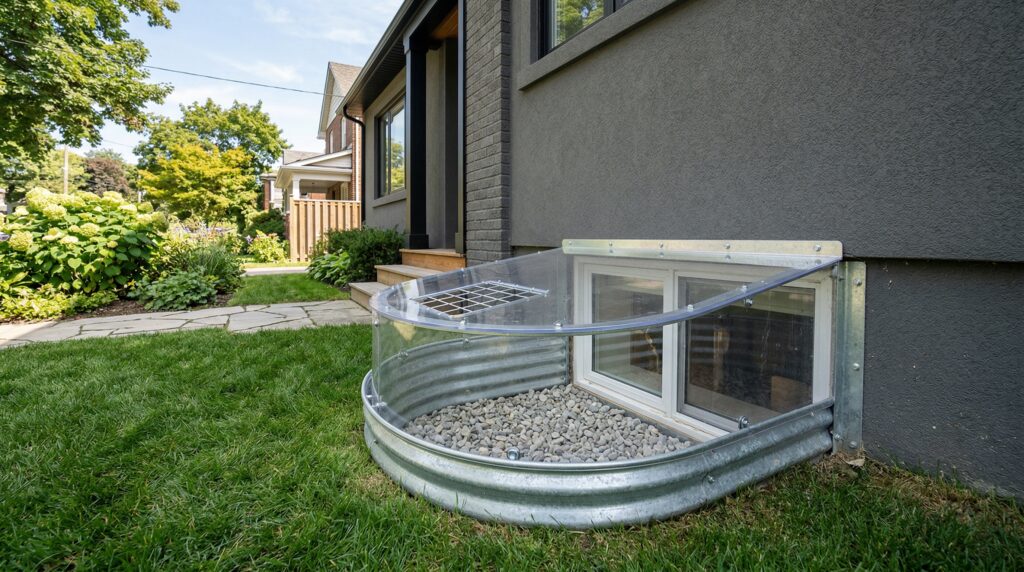
Last updated: August 15, 2026
If you have a basement window in a window well and that well fills with water during a heavy rain, you are one bad seal away from a flooded basement. Window well flooding is one of the most common causes of basement water intrusion across the GTA, and it is also one of the easiest to fix once you understand what is actually going wrong. Here is how window well drainage works (and fails) on Toronto homes, and what a proper egress window well install looks like in 2026.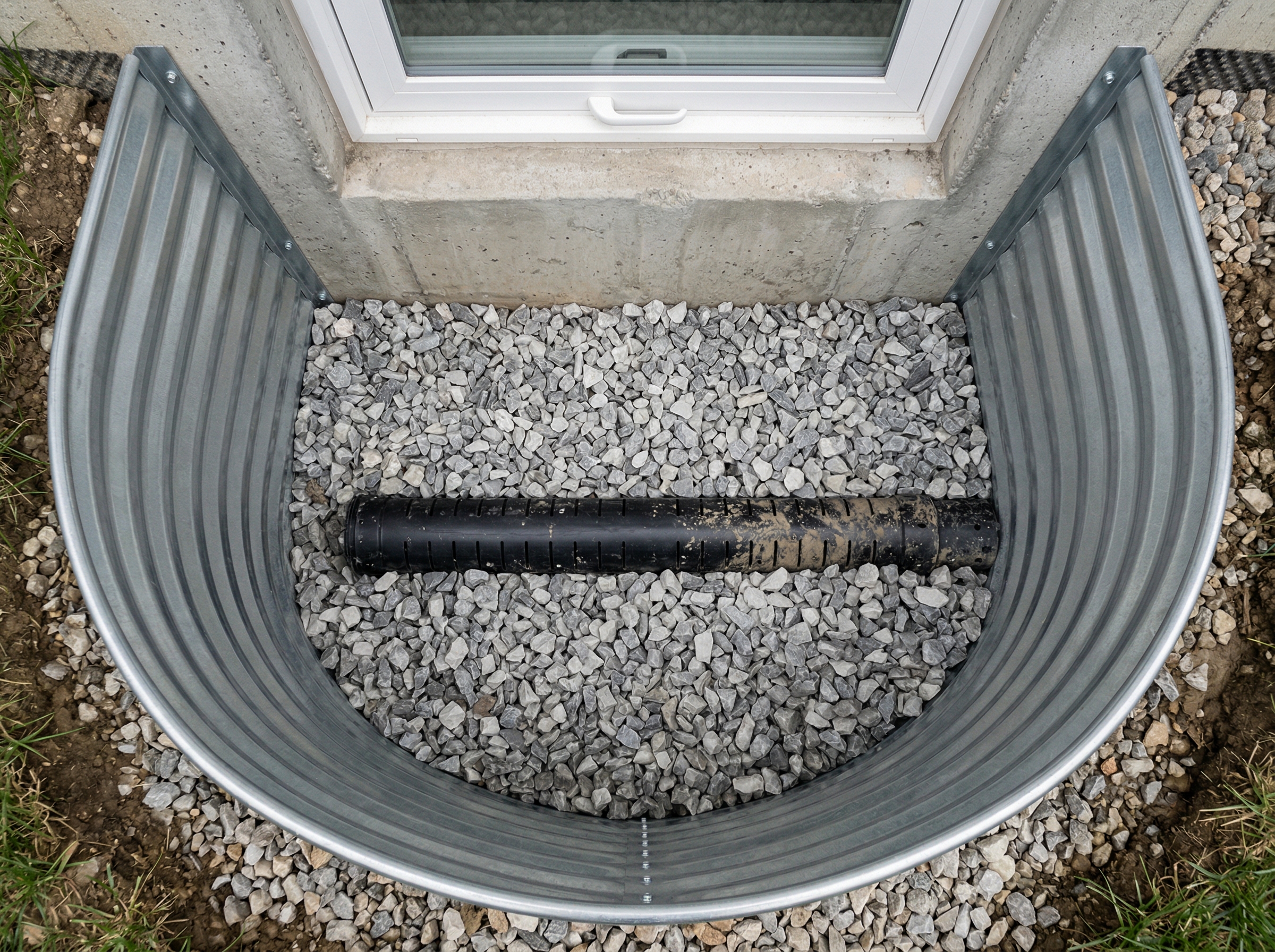 The main cause of window well flooding is failed or missing drainage at the bottom of the well. To permanently stop the flooding, the well must be excavated to the footing, fitted with a 4-inch perforated drain pipe tied to the weeping tile, filled with clear stone, and capped with a transparent polycarbonate cover.
Download: Window Wells in GTA Basements: How to Stop Them From Flooding Your Basement — Quick Reference PDF
What a window well is supposed to do
A window well is a galvanised steel or moulded plastic half-circle that holds back the earth around a basement window so the window itself sits below grade without being buried in soil. The well lets light in, lets the window open, and provides emergency egress from a finished basement bedroom. To work properly, the well needs to drain rainwater out of the bottom faster than it comes in from the top. When the drainage fails, the well becomes a bathtub against your basement window, and the only thing stopping a flood is the window seal.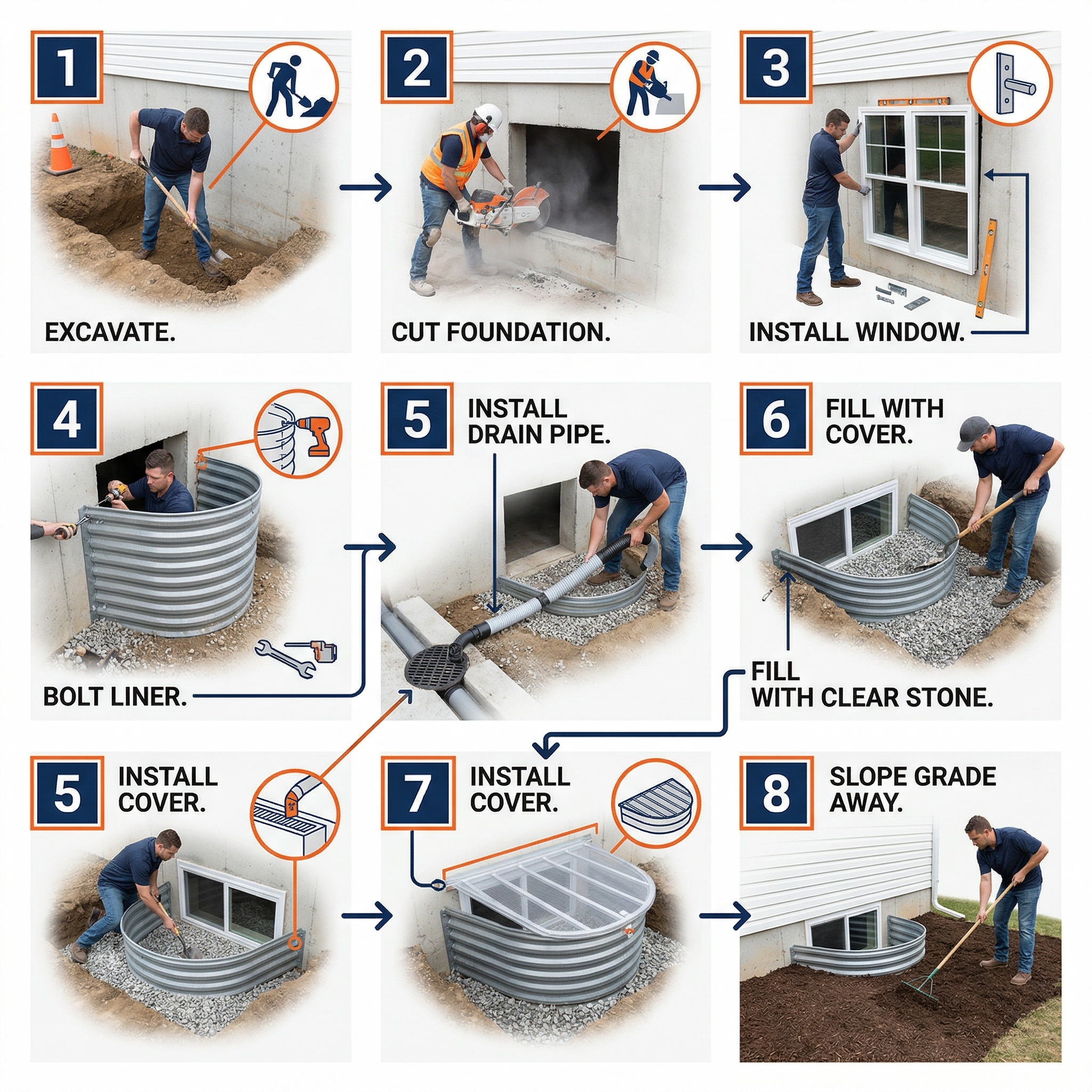
Why GTA window wells flood
1. No drainage at all
Most builder-grade window wells in GTA homes from the 1970s through the 1990s were installed with no drainage tie-in. The bottom of the well sits on whatever soil happened to be there during construction. When that soil silts up and stops percolating (usually within 5 to 10 years), the well fills up in any heavy rain and the only way out is over the top or through the window.2. Drainage tied to weeping tile that has failed
Newer wells were drained into the perimeter weeping tile around the foundation. When the weeping tile collapses or silts up (see our spring leaks post), the drain in the bottom of the well backs up. The well fills, the basement floods.3. Surface debris
Leaves, mulch, and grass clippings build up in the bottom of the well over years. The drainage gravel turns into soil. The drain hole, if there is one, plugs solid. We have pulled wells out of GTA homes that had 18 inches of organic debris in the bottom and a perfectly intact gravel layer underneath that nobody could see anymore.4. Grade pointing toward the well
If the soil around the well slopes toward the house instead of away, every storm dumps surface runoff straight into the well from the top. Even a perfect drain at the bottom cannot keep up with that volume in a heavy rain.How to fix a flooding window well
Quick fix: clean out and add a clear cover
For a well that floods occasionally and has not damaged the window seal yet, the cheapest fix is excavation and cleanout of the well, refresh the gravel base with 12 to 18 inches of clear 3/4 inch stone, install a transparent polycarbonate window well cover that lets light in and keeps rain and debris out. Total cost in 2026 GTA: $300 to $700 per well, plus the cover at $80 to $200.Permanent fix: drain tie-in and full rebuild
For chronic flooders, the well has to come out, the bottom has to be excavated to footing depth, a new 4 inch perforated drain pipe gets installed and tied directly into either the weeping tile or a dedicated dry well, the bottom is filled with 18 inches of clear stone, and the well is reinstalled with a new heavy-gauge galvanised liner. Cost in 2026 GTA: $1,500 to $3,500 per well depending on depth and discharge routing.Egress upgrade for a legal basement apartment
If you are converting your basement into a legal secondary suite under Ontario Building Code requirements, the bedroom window must meet egress dimensions: minimum unobstructed opening of 0.35 square metres with no dimension less than 380 mm. That almost always means a larger window, a larger well, and a properly engineered drainage tie-in. Cost for a full egress window plus engineered well plus drainage in 2026 GTA: $4,500 to $8,500 per window depending on whether structural lintel work is required.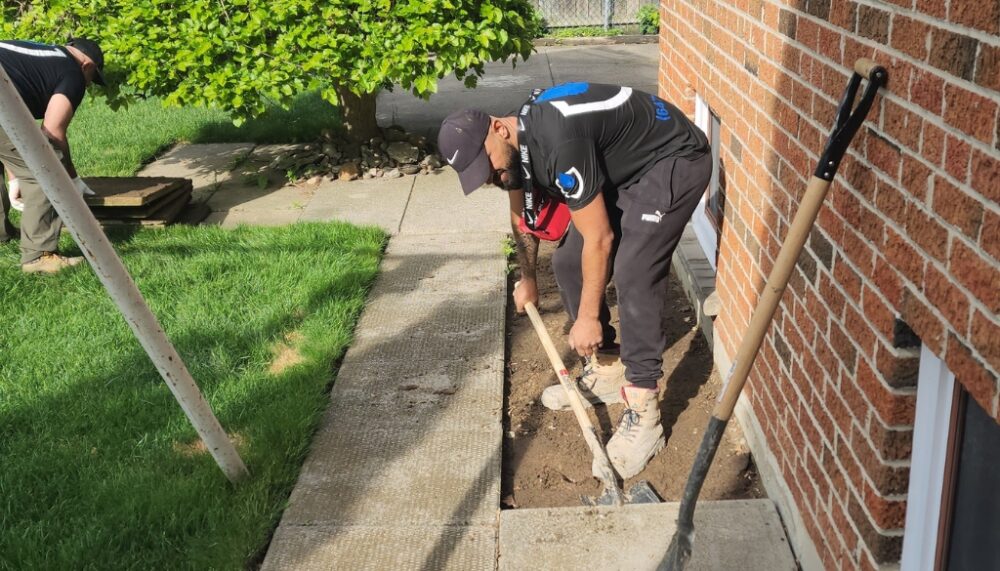
What a proper egress window well install looks like
- Excavate the existing well or the new opening to footing depth, 18 inches deeper than the bottom of the new window.
- Cut the foundation wall to receive the new larger window if upgrading to egress size. This requires a structural lintel above the cut and engineer sign-off for any opening wider than 36 inches.
- Install the new window with proper flashing, sealant, and exterior brick mould.
- Build the well: bolt the galvanised liner to the foundation with concrete anchors at 16 inch spacing top and bottom.
- Drain: 4 inch perforated PVC laid in the bottom of the well, wrapped in filter fabric, sloped to discharge into the existing weeping tile or to a new dry well 6 feet from the foundation.
- Stone: 18 inches of clear 3/4 inch stone over the drain pipe, no soil or fines.
- Cover: clear polycarbonate well cover sized to the well, secured against wind lift.
- Grade: backfill around the well so the surface slopes away from the foundation at 5 percent for the first 6 feet.
Frequently asked questions
Is a window well cover enough to stop the flooding?
A cover stops rain and debris from entering the well from above, which addresses roughly half of the typical window well flooding problem. However, if the bottom of the well has no working drainage, groundwater can still rise into the well from below during spring snowmelt or extended wet periods. In those cases the well fills from the ground up regardless of what is on top. The complete fix is always a cover combined with a working drain tied into either the weeping tile or a dedicated dry well. Covers alone are worth installing — they extend the life of everything underneath — but do not rely on a cover to solve chronic flooding without also sorting out the drainage.
Can I tie the window well drain into my sump pit?
Yes, and on many newer GTA homes built from the mid-1990s onward that is exactly how the drain was run at original construction. The drain pipe exits the bottom of the well, passes through the foundation wall via a sealed sleeve, and discharges directly into the sump pit basin. As long as the sump pump is correctly sized for the additional inflow volume — and the pump is in good working condition with a battery backup — this is a reliable and code-compliant discharge method. One caution: if the sump already struggles to keep up during heavy rain, adding window well drainage to it without upgrading the pump will make the problem worse, not better. Have a contractor assess the pump capacity before routing well drains to the pit.
Does my basement bedroom need an egress window?
Under the Ontario Building Code, any basement bedroom in a legal secondary suite must have an egress window with a minimum unobstructed opening of 0.35 square metres and no single dimension less than 380 mm. This requirement is enforced by municipal building departments when a permit is pulled for a secondary suite conversion. For an existing single-family home where the basement is finished and used by the homeowner but not rented out, the egress requirement is not technically triggered by current use, but it is still strongly recommended for life safety. If you ever plan to rent the space, add bedrooms, or sell to a buyer who intends to, having egress already installed avoids a required upgrade. Most GTA insurers and home inspectors flag missing egress as a risk item regardless of legal tenancy status.
How long does a window well replacement take?
A straight replacement of an existing window well — cleaning out the old well, pulling it off, refreshing the gravel, installing a new liner with a proper drain tie-in — takes one to two days per well when no structural work is involved. A full egress upgrade that requires cutting a wider or taller opening in the foundation wall takes three to five days per opening, because the structural lintel work, concrete curing, and engineer inspections all add time. Weather matters too: excavation is typically suspended if the forecast calls for significant rain while the foundation is open. Plan for five business days of total site disruption for a full egress conversion, less if you are only refreshing an existing-size well.
What is the warranty on a properly installed window well system?
A galvanised steel liner from a reputable manufacturer is typically warranted for 25 years against corrosion penetration. The drainage components — perforated pipe, filter fabric wrap, stone bed — have no meaningful wear-out mechanism if installed correctly and inspected every three to five years to clear debris from the drain opening. The seal between the window frame and the foundation wall should carry a 10-year workmanship warranty from any reputable GTA contractor. Ask specifically what the warranty covers and whether it includes the cost of excavation if the seal fails; some contractors warrant labour only and exclude the dig cost. Get the warranty terms in writing before signing any contract.
Pricing disclaimer: Any prices mentioned in this article are estimated 2026 market averages for the Greater Toronto Area. Actual costs will vary depending on your specific foundation depth, required structural work, and local permit fees. Always request a written, site-specific quote before authorizing any basement waterproofing or excavation work.