Polyurethane vs Epoxy Foundation Crack Injection: Which One Your Toronto Home Needs
Last updated: August 15, 2026
If a contractor has quoted fixing foundation cracks in your basement on your Toronto home and you are wondering whether you are getting the right resin, you are asking the right question. Polyurethane and epoxy injection look identical from the homeowner side, but they do completely different jobs. Pick the wrong one and the repair fails inside two winters. Pick the right one and you get a 25 year warranty on a leak that has been driving you crazy for a decade. Here is how a professional crack injection crew decides between the two on every job.
A foundation crack in poured concrete is rarely just a surface mark. It runs all the way through the 8 to 10 inch wall, top to bottom, and it acts like a straw pulling groundwater into your basement under hydrostatic pressure. Crack injection seals the crack the only way that actually works long-term: by filling the entire void from one face of the wall to the other with a resin that bonds chemically to the concrete on both sides. Surface patches do nothing because the water is coming from the outside under pressure.
How Polyurethane Works
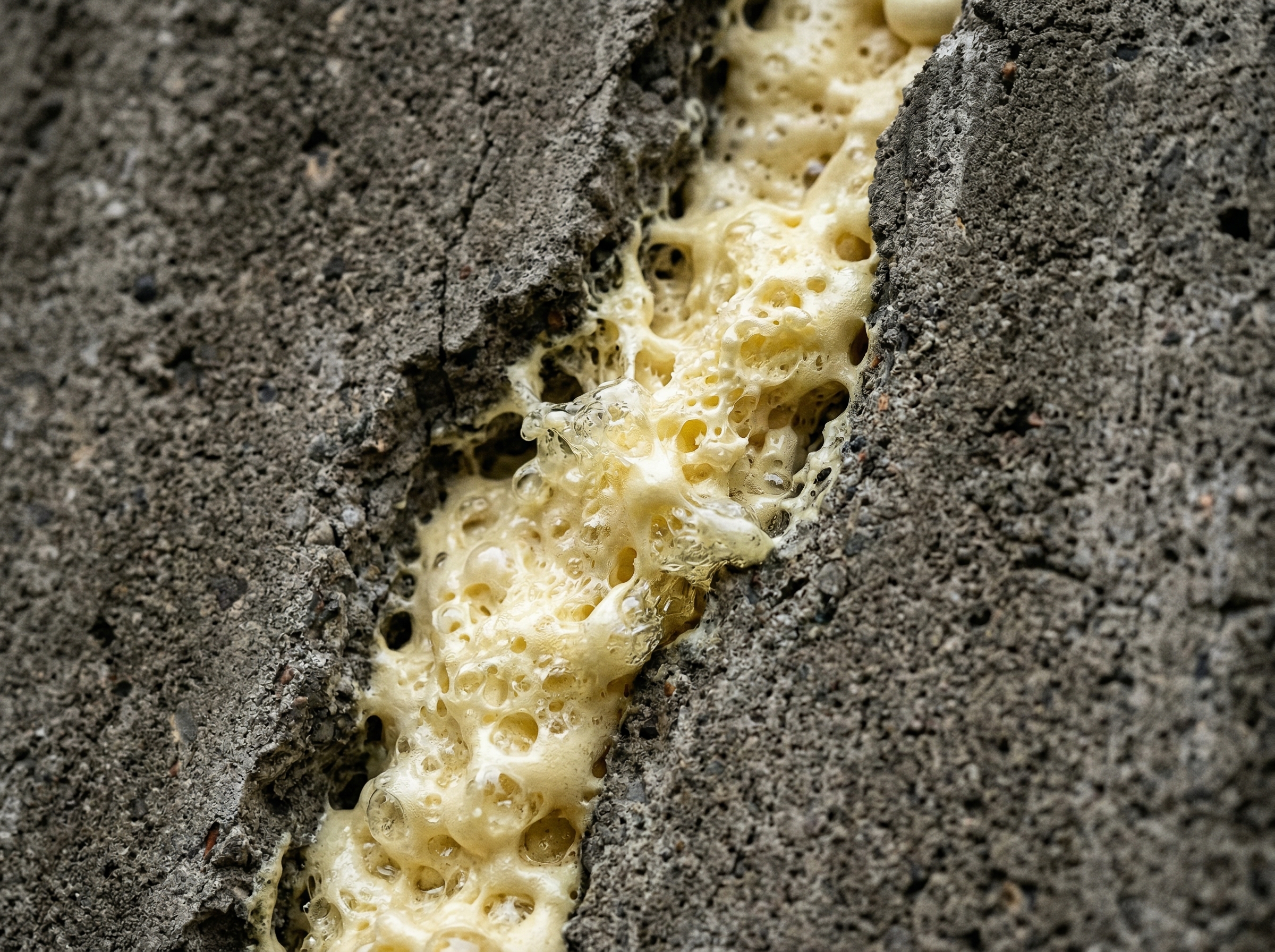
Polyurethane foam expanding inside a foundation crack during cure
Polyurethane is a flexible, expanding resin. When it hits water inside the crack, it foams and expands to two to four times its original volume, filling every micro-fissure off the main crack and bonding to wet concrete. Once cured, it stays rubber-flexible. That flexibility is the whole point. Toronto foundations move with every freeze-thaw cycle, and a flexible resin bends with the wall instead of cracking apart at the bond line.
Polyurethane is the right answer for almost every leaking crack in a residential basement, regardless of whether the crack is currently wet or dry. Modern hydrophilic polyurethanes can be injected into actively leaking cracks, which is critical when water is pouring in during a March thaw and you cannot wait two weeks for the wall to dry.
How Epoxy Works
Epoxy is rigid. Once cured it is harder than the surrounding concrete. It bonds two pieces of concrete together with a chemical weld stronger than the concrete itself. That makes epoxy the right answer when the crack is structural, meaning the wall is moving under load and the crack needs to be welded shut to restore the structural integrity of the wall.
The catch is that epoxy needs a clean, dry crack to bond properly. Wet cracks reject epoxy. And because epoxy is rigid, if the foundation continues to move (frost heave, settling, lateral pressure), a new crack will open right next to the old one. Epoxy fixes the original crack permanently but does not address ongoing movement.
How A Crew Picks One Over The Other On A Real Job
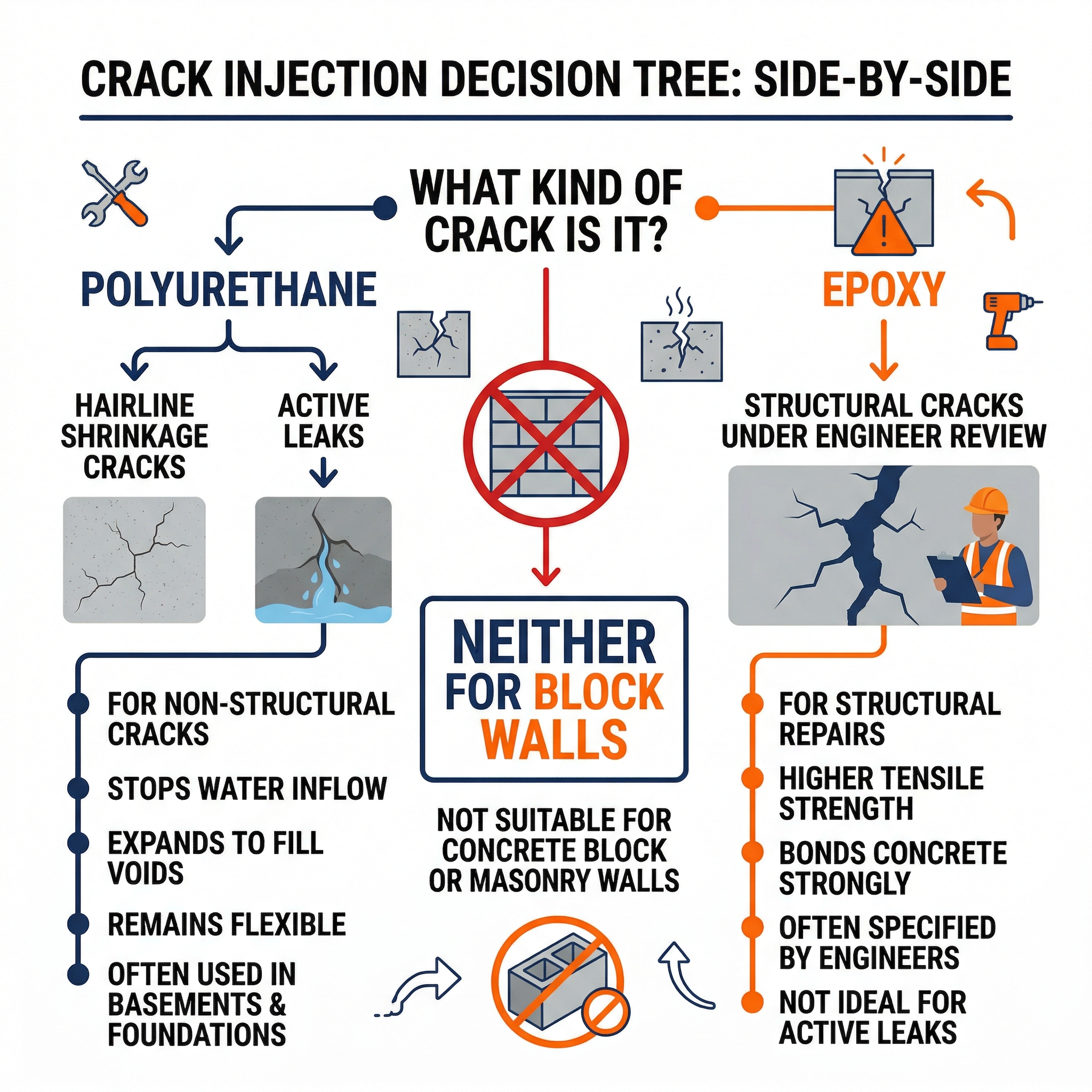
Infographic comparing polyurethane and epoxy foundation crack injection use cases
The decision tree is short:
Is the crack actively leaking water right now? Polyurethane.
Is the crack a hairline non-structural shrinkage crack on a poured wall? Polyurethane.
Is the crack wider than 1/4 inch and is the wall visibly bowed or moving under load? Epoxy plus a structural assessment from an engineer first. Do not just inject and walk away.
Is the crack on a load-bearing pier or footing? Epoxy with engineer involvement.
Is the crack on a block wall (not poured concrete)? Neither. Crack injection does not work on block walls because the cores are hollow and the resin escapes into them. Block walls need exterior excavation or interior membrane systems.
For most calls we take in our service area, the answer is polyurethane. Structural epoxy jobs are maybe 1 in 20 of our crack injection visits.
What A Proper Crack Injection Visit Looks Like
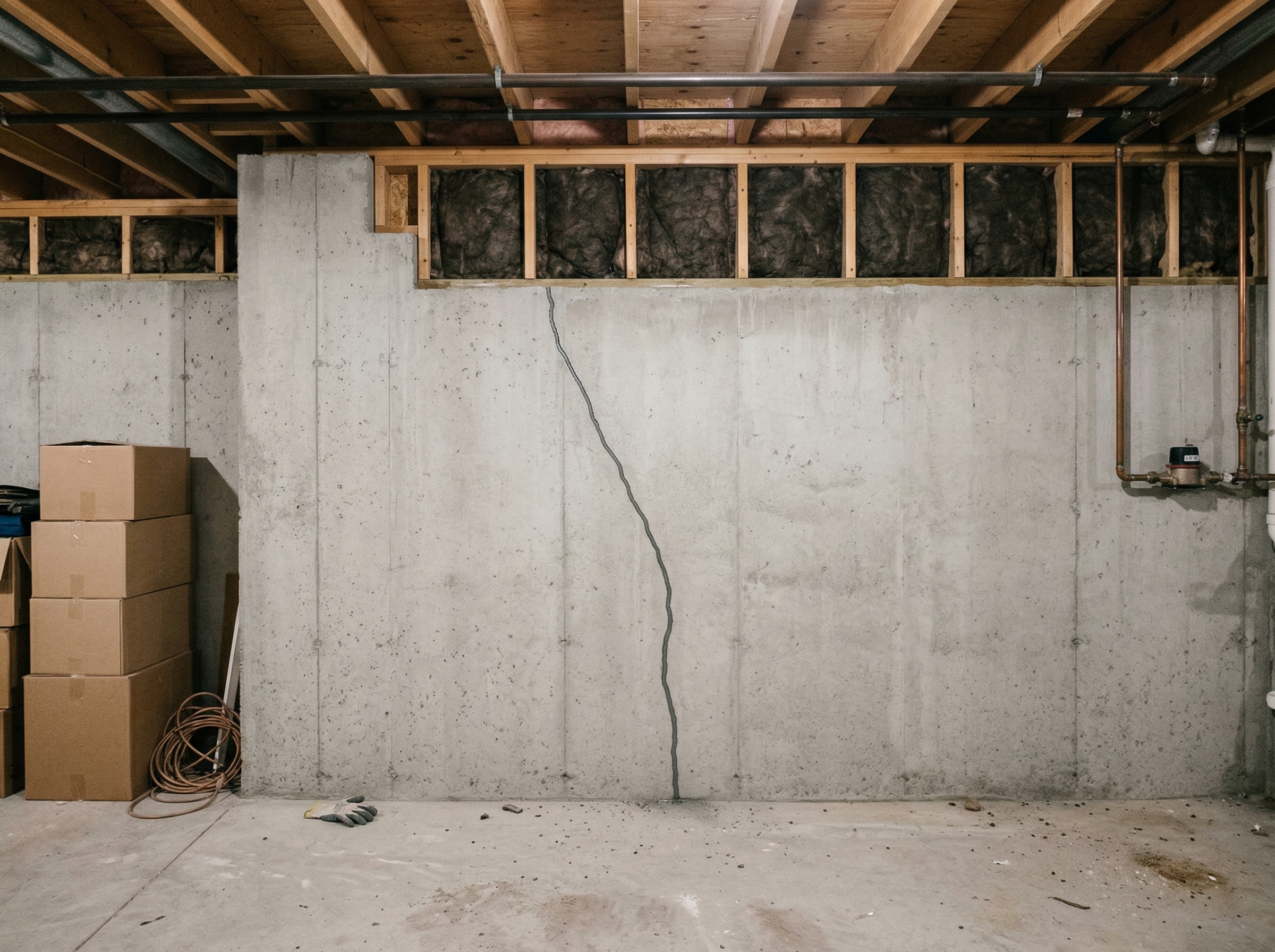
Repaired foundation wall in a Toronto basement showing a sealed crack line
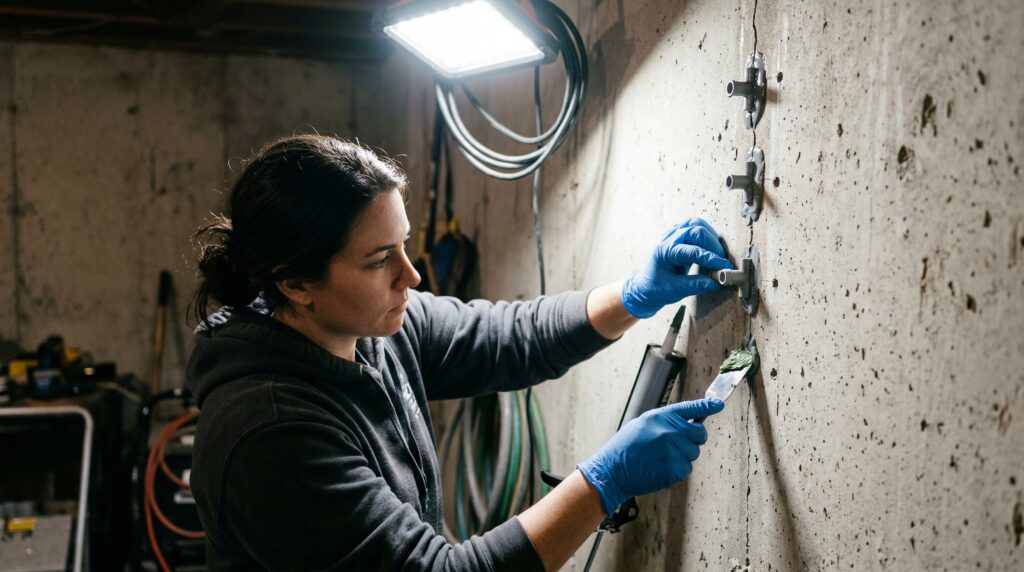
A professional crack injection job takes two to four hours per crack and follows a strict sequence:
Crack mapping. The technician traces the full length of the crack on the inside of the wall and marks it with a paint stick, top to bottom.
Surface prep. The crack is cleaned and any old hydraulic cement, paint, or efflorescence is wire-brushed off.
Port installation. Plastic injection ports are glued every six to eight inches along the full length of the crack with a fast-setting epoxy paste.
Surface seal. The epoxy paste is troweled over the entire crack between ports to contain the injection pressure.
Cure time. The surface seal needs about 45 minutes to set hard.
Injection. The resin is pumped in at the bottom port first, under pressure, until it appears at the next port up. Move up one port. Repeat to the top of the wall.
Cure and clean up. Resin cures within 24 hours. Ports and surface seal are removed two days later, leaving the wall flush.
If a crew shows up, drills three holes, squirts something in, and leaves in 30 minutes, that is not a real injection. Walk away.
Approximate Cost In 2026
Polyurethane injection on a single residential crack starts at approx. $400, depending on length and access. Epoxy structural injection starts at approx. $600 per crack. Multi-crack discounts are normal. Both should come with a written warranty, 10 years minimum, 25 years from most reputable GTA waterproofing contractors.
Frequently Asked Questions
Will Crack Injection Fix A Leak In A Block Wall?
No. Concrete block walls have hollow cores and the resin runs into the cores instead of sealing the crack. Block walls need exterior membrane work or an interior drainage system instead.
Can I Inject A Crack Myself With A Kit From The Hardware Store?
Technically yes, practically no. The kits use the same resin chemistry but the injection pressure, port spacing, and surface seal prep are what determine whether the crack actually fills full-depth. Most DIY injections seal the visible part of the wall and leave the outer half of the crack open. The leak comes back.
Does Crack Injection Work In Winter?
Yes. Polyurethane injection works at any temperature above freezing inside the basement. The resin chemistry is unaffected by cold soil outside the wall. Most winter calls we get are for cracks that started leaking after a January freeze-thaw event.
How Long Does The Warranty Last?
Twenty-five years is standard from established GTA waterproofing contractors. The warranty should be transferable when you sell the house; that is a fair test of whether the contractor expects to still be in business in 2050.
Will The Crack Come Back Somewhere Else?
If the original crack was caused by concrete shrinkage during the cure (most hairline cracks), no. If the original crack was caused by ongoing foundation movement, yes, and you need to address the movement (settling, frost heave, lateral pressure) or no resin will solve the problem long-term.
Get A Proper Crack Diagnosis Before You Book A Repair
The right resin and the right injection technique turn a leaking foundation into a sealed wall for the rest of your homeownership. The wrong call costs you the same money and leaves you leaking again next spring. request a free inspection and we will walk your basement, identify the type of crack, and recommend polyurethane, epoxy, or something completely different if injection is not the right call.

 Home
Home