
 Home
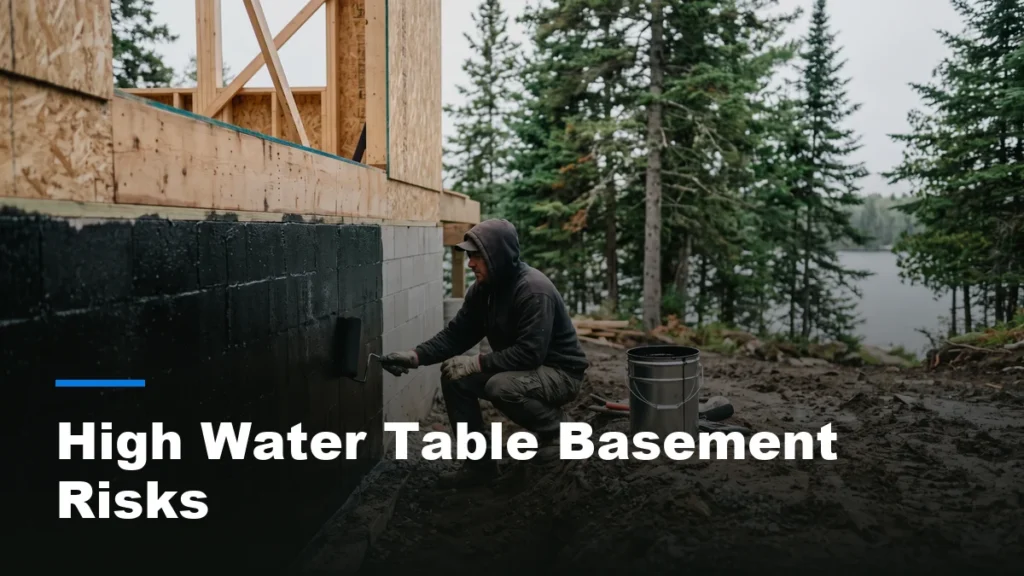
A retiree who moved to a bungalow two streets back from Lake Couchiching figured a quieter block meant a quieter basement too. Two summers in, she learned that homes near the Orillia shoreline play by a different set of rules. A high water table basement condition can sit under a property even when the lawn on top looks perfectly dry, and it changes what a reasonable amount of everyday basement waterproofing needs to account for.
If you live along Lake Couchiching, Lake Simcoe, or one of the smaller lakes and rivers around Orillia, this is worth understanding before it shows up as a wet carpet. Here is what a high water table basement actually means, why the shoreline sees more of it, the signs to watch for, and what generally helps.
What a high water table basement actually means
The water table is simply the depth below ground where soil stays saturated year round. In most of the GTA that depth sits well below a typical basement floor. Closer to a large lake, the water table often sits much higher, sometimes close enough to the surface that a foundation footing is effectively sitting near or below it for part of the year.
That is what people mean by a high water table basement: a foundation that spends a meaningful part of the year with wet soil pressing against the walls and floor from every side, not just after a heavy rain. It is a groundwater condition rather than a one-time event, which is exactly why it needs a different approach than a basement that only gets damp during storms.
People often ask
Is a high water table the same as poor drainage? Not quite. Poor surface drainage means water is pooling because of grading or gutters. A high water table is about groundwater below the surface. A property can have excellent surface drainage and still sit on a high water table, which is why the two problems sometimes need different fixes.
Why the Orillia shoreline sees it more
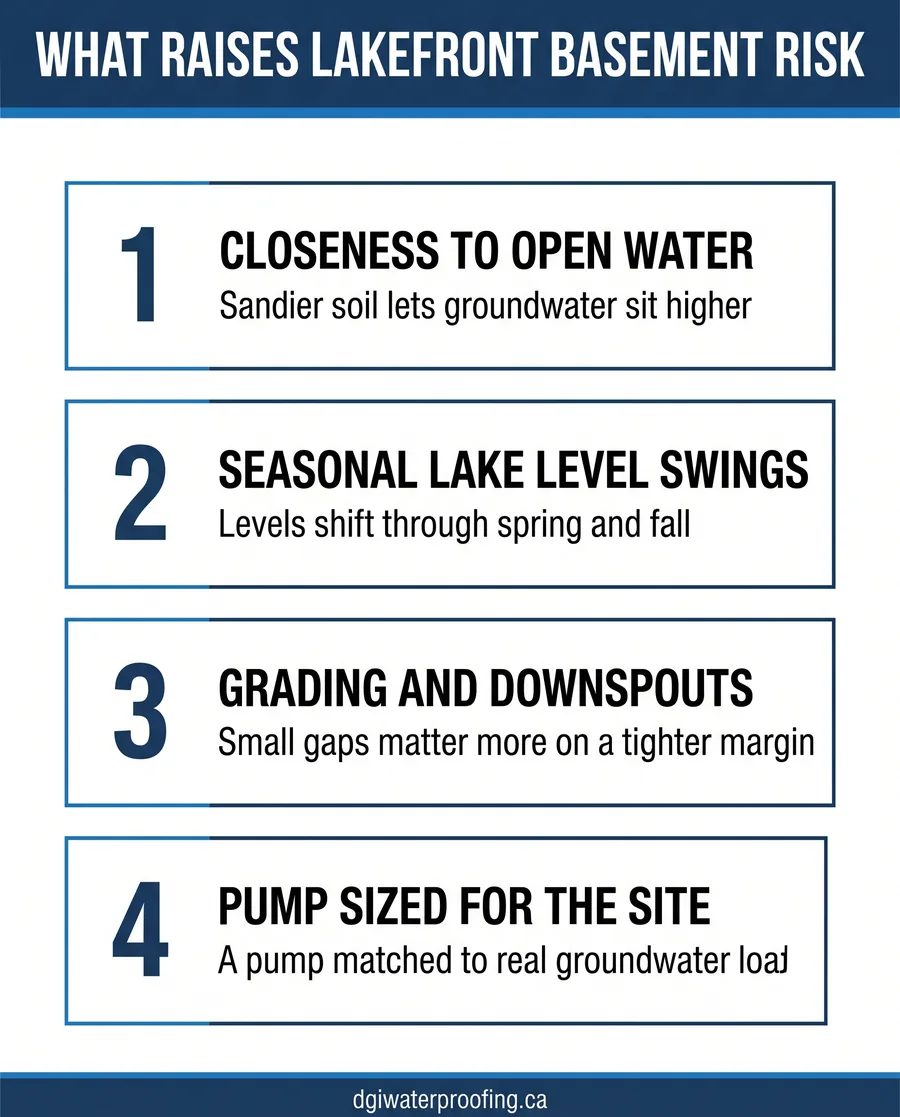
Proximity to open water is the biggest factor. Soil near Lake Couchiching and Lake Simcoe tends to be sandier and more porous than clay-heavy soil further inland, which lets groundwater move more freely and sit closer to the surface near the shore. Lake levels themselves shift through the year too, generally higher in spring and lower by late fall, and the Lake Simcoe Region Conservation Authority’s water level updates is a useful way to see how the lake is trending in a given season rather than guessing from memory.
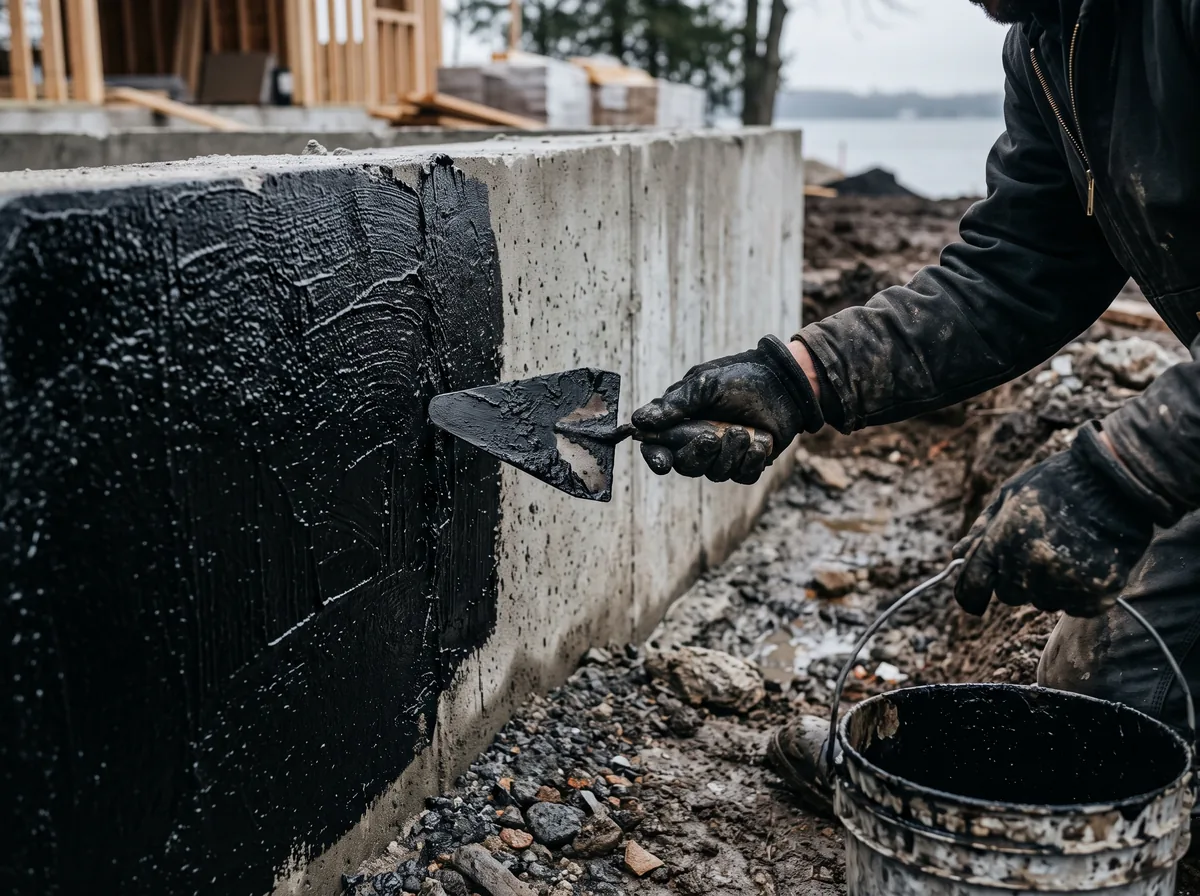
None of that means every home near the water has a problem. It means the margin for error is smaller. A downspout draining too close to the wall, a bit of settling around the foundation, or a window well that traps water matter more on a lot with a high water table basement than they would three streets back from the shore. For homeowners in our service area around the Lake Couchiching shoreline, that is usually the detail worth getting right first.
Signs your basement is already dealing with it
- A sump pump that runs frequently even during dry stretches, not just after rain.
- Efflorescence, the chalky white mineral crust, appearing along the lower foundation wall.
- A musty smell that never fully clears, even with a dehumidifier running.
- Hairline cracks low on the foundation wall that seep rather than stay dry.
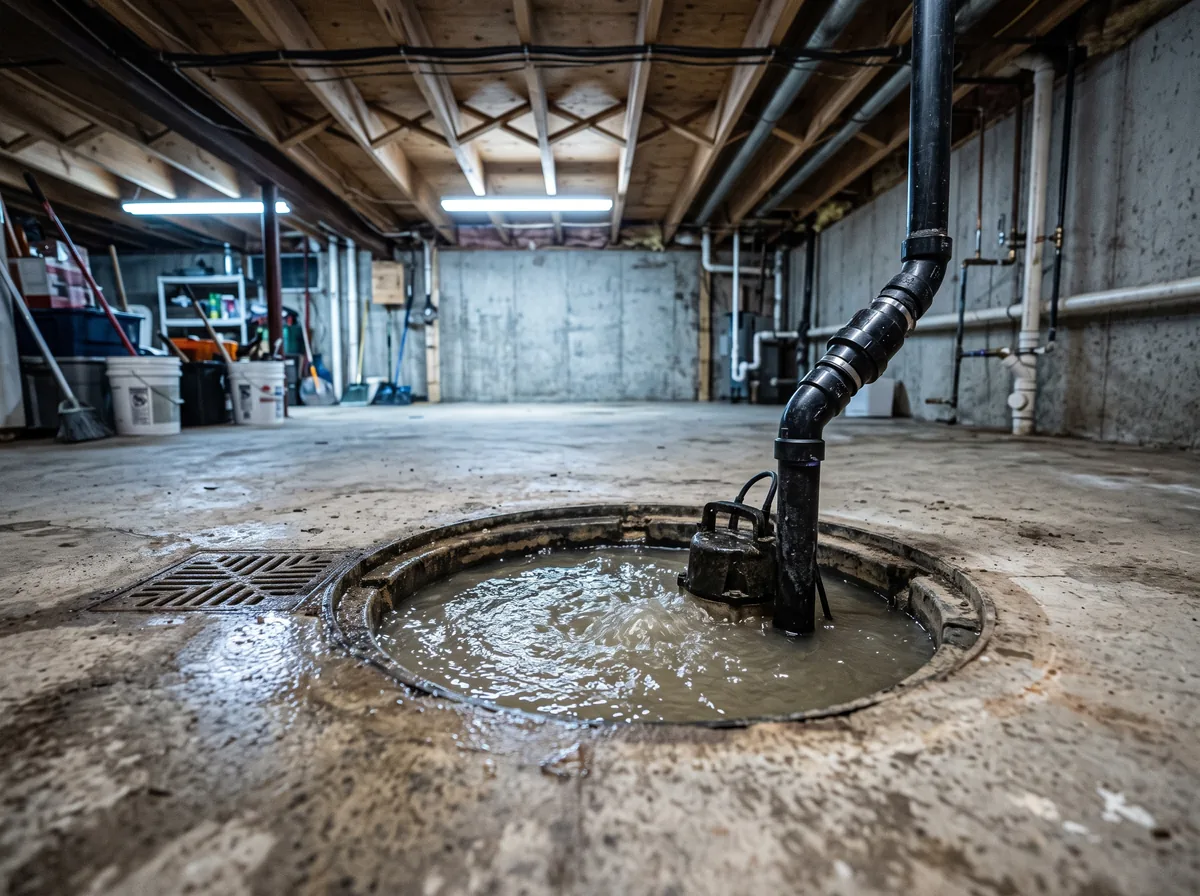
- A floor drain or sump pit that stays partly full of water most of the time.
Any one of these on its own is worth a look. Several together, especially on a property close to the water, usually point toward ongoing pressure from groundwater against the foundation rather than a single leak you can patch and forget.
What generally helps in these conditions
On a lot with a genuinely high water table, the goal shifts from keeping water out during a storm to managing it as a constant background condition. That commonly means a membrane on the outside of the wall to keep water from reaching the concrete in the first place, paired with an interior drainage layer and a properly sized sump pump that can keep up with steady groundwater rather than just the occasional big storm.
Save your money
A pump that is undersized for a genuinely high water table works harder than it should and tends to fail sooner, which usually costs more over time than sizing it correctly the first time. Ask what the pump is rated for and how that compares to what your property actually sees before you sign off on a replacement.
What to do next if you live near the water
You do not need to guess how high your water table sits. A waterproofing technician can generally tell a lot from the pattern of moisture in your basement, the age and grading of the property, and how close you are to the shoreline, without any invasive testing. That assessment is what tells you whether you are dealing with routine maintenance or a condition that calls for a more complete system.
Good to know
Water table depth and flood risk vary block by block, even along the same shoreline, and this article describes general patterns rather than a reading of your specific property. Confirm what applies to your home with a qualified waterproofing contractor, check current lake conditions with the conservation authority before any seasonal work, and review your policy directly with your insurer for what flooding and groundwater coverage it includes.
Download the free quick guide
A printable guide for Orillia-area homeowners: what a high water table basement looks like day to day, and the questions worth asking before a waterproofing assessment.
Frequently asked questions
How do I know if my property actually has a high water table?
The clearest clues are behavioural rather than a single test: a sump pump cycling on its own between rains, water sitting in a sump pit that never fully drains, or dampness low on foundation walls that never quite goes away. Distance from open water is the biggest general predictor. A waterproofing technician can usually form a good read from the pattern in your basement combined with the property’s grading and history, and that is a more reliable starting point than guessing from a neighbour’s experience.
Does a high water table basement mean my house will flood?
Not necessarily, and it is not something to treat as a foregone conclusion either way. A high water table raises the background pressure and moisture a foundation deals with, which makes gaps in grading, drainage or waterproofing matter more than they would on a typical inland lot. Plenty of homes on a high water table go decades without a flood because the systems managing that groundwater are sized and maintained for the conditions. The honest answer for your property comes from an assessment, not a general rule.
Is exterior waterproofing always the right call for lakefront homes?
Not always, and it depends on the specific problem, the age of the foundation, and what access the lot allows. Exterior systems generally address water before it reaches the wall, while interior systems manage water that has already arrived and route it to a sump pump. Some properties benefit from a combination of both. This is genuinely a judgment call that depends on your foundation and site conditions, so treat it as a starting question for an assessment rather than a decision to make from general advice.
Does lake level change through the year actually affect my basement?
It can, particularly on lots close to the shoreline. Lake levels in this region are typically higher in spring and gradually drop through summer and fall, and groundwater near the shore tends to follow that same seasonal pattern with some lag. That is one reason a basement that stayed dry all winter can start showing symptoms in spring. Checking seasonal lake level updates from the local conservation authority is a reasonable way to understand the broader trend for your area.
What is the first thing I should do if I suspect a high water table?
Start by watching and recording, not digging. Note how often your sump pump runs, whether the pit ever fully drains, and where dampness shows up on the walls, over a couple of weeks that includes at least one dry stretch. That record, along with the age and grading of your home, gives a waterproofing technician enough to recommend a sensible next step, whether that is routine maintenance, a drainage upgrade, or a fuller exterior system.
If you are within a few blocks of Lake Couchiching, Lake Simcoe, or another local waterway, here is where to start:
- Watch your sump pit for a week and note whether it holds water even without recent rain.
- Walk the foundation after the next storm and photograph any damp spots low on the walls.
- Book an assessment before symptoms move from a damp wall to standing water on the floor.
We work with lakefront and high water table homes across the Orillia area regularly, and an assessment usually settles the question of what your property actually needs. Request a basement moisture assessment and we will start there.