
 Home
Home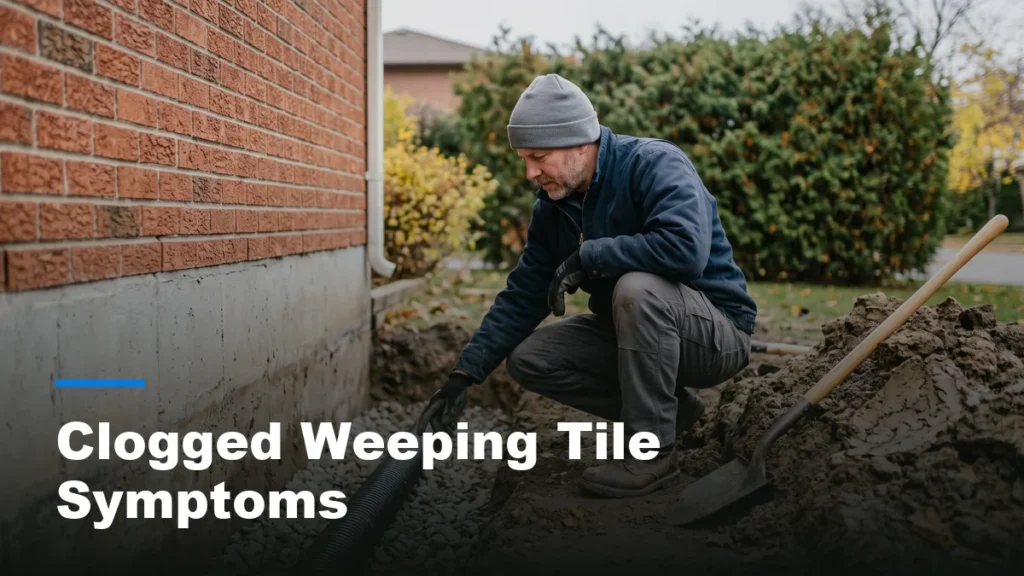
A homeowner in Markham kept noticing the same patch of carpet in her rec room felt cool and faintly damp every March, no matter how many times she steamed it dry. By the third spring she pulled the baseboard back and found a thin white crust creeping up the drywall behind it. What she was looking at were classic clogged weeping tile symptoms, and by the time carpet and drywall show them, the drainage system built into the footing has usually been struggling for more than one season. Catching the pattern earlier is exactly what a weeping tile system assessment is meant to do.
Weeping tile is the perforated pipe that rings your foundation footing and carries groundwater away before it ever reaches your basement floor. It works quietly for decades, right up until it does not, and the failure is almost never obvious from indoors until it has been going on for a while. The signs below are the ones a technician checks first, from the subtle ones you can spot this weekend to the ones that mean water is already getting in.
What a weeping tile system actually does
Weeping tile, also called drain tile, is a run of perforated pipe laid in a bed of clear stone alongside the footing, at the lowest point of the foundation. Groundwater in the soil moves through the stone and into the perforations rather than pressing against the concrete, then travels along the pipe to a sump pit, where a pump lifts it out and away from the house. In some older Toronto and GTA neighbourhoods, the pipe instead ties into a storm or combined sewer connection, which is one reason age and construction era both matter when you are trying to figure out what you have.
When the system is doing its job, this entire process happens without you noticing a thing. There is no puddle, no smell, no sound beyond the sump pump cycling on after a rainstorm. That is exactly why clogged weeping tile symptoms tend to sneak up on homeowners. The system does not announce a problem the way a burst pipe does. It just quietly stops doing part of its job, and the evidence shows up somewhere else first.
The clogged weeping tile symptoms to watch for
Some of these show up early, while the system is only partly restricted. Others tend to mean water has already been finding its own way in for a while. Reading them together, rather than reacting to just one, gives a much more honest picture.
| What you notice | What it commonly points to | Where to look first |
|---|---|---|
| A sump pump that runs far more often than it used to | Water is reaching the pit a different way, or less of it is draining through the tile as designed | The sump pit and the discharge line outside |
| A musty smell that returns after every rain | Trapped moisture along the footing rather than a surface leak | Along the base of foundation walls |
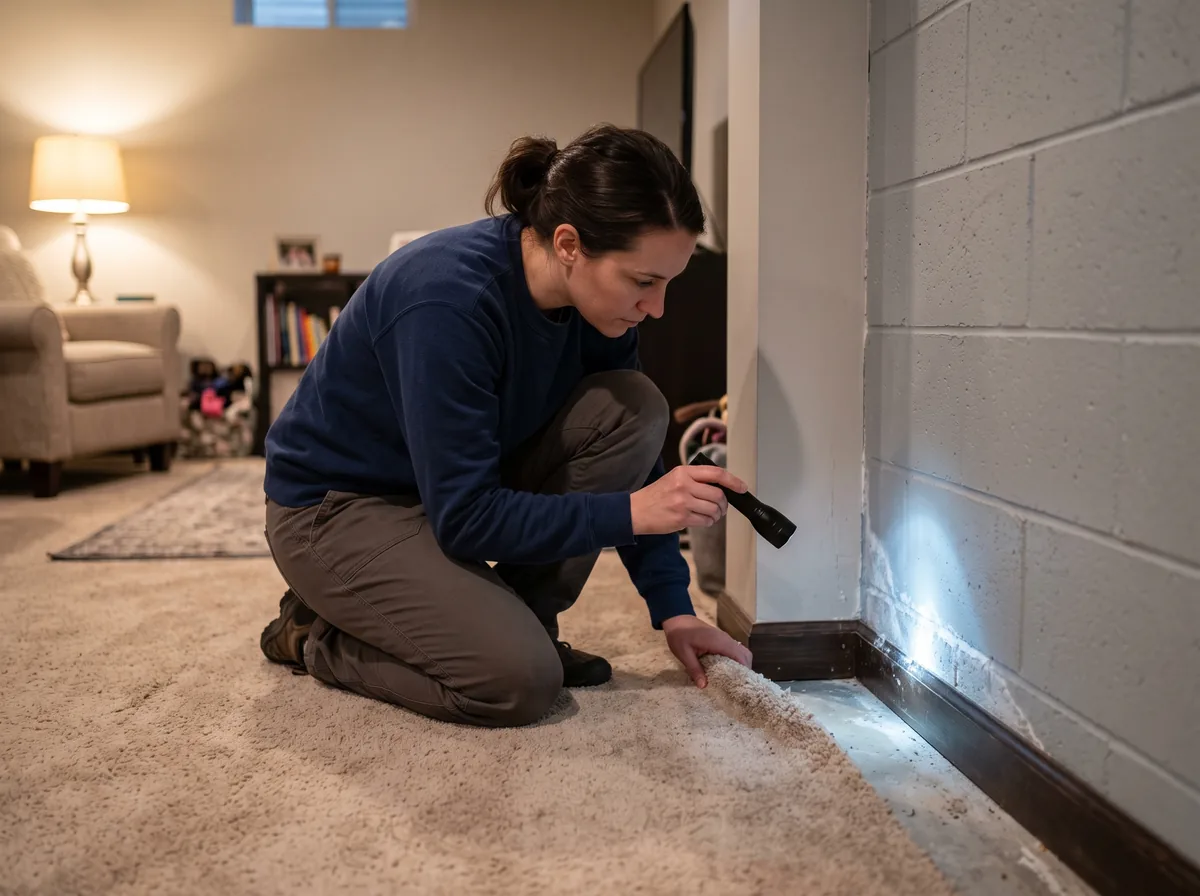
| White, chalky crust on the lower block or drywall | Mineral salts left behind as moisture wicks through concrete and evaporates | Cove joint where the wall meets the floor |
| A damp or cool patch of carpet or flooring that keeps coming back in the same spot | Slow, steady seepage rather than a one-time flood | That exact spot, checked over several weeks |
| Standing water or a soft, spongy area in the yard near the foundation after rain | Water backing up outside instead of draining down into the tile | The grade immediately around the foundation |
Red flag
Visible water on the floor, a sump pump that cannot keep up during a storm, or a strong, persistent musty smell are not wait-and-see signs. Those point to a system that is already letting water through rather than one that might fail later. Get it looked at promptly rather than adding it to a future to-do list.
Where these symptoms usually show up first
Cove joint and hairline wall seepage
The cove joint, where the basement floor meets the foundation wall, is often the first place a struggling weeping tile shows itself, because it sits right above where the pipe runs. a closer look at cove joint leaks walks through what that seepage pattern tends to look like and why it is different from a crack running through the wall itself.
Sump pit and pump behaviour
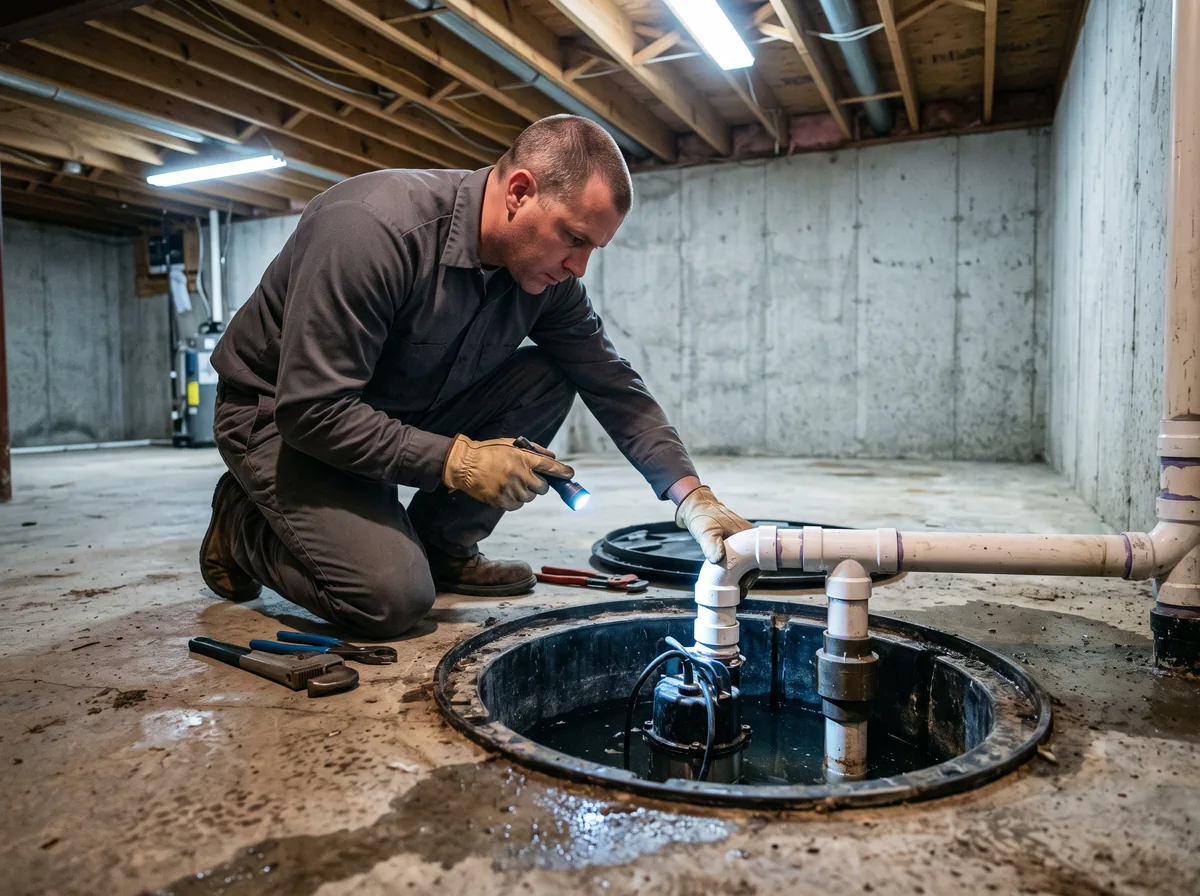
The pit itself tells its own story. A pump that short-cycles, runs continuously during light rain, or sits nearly dry even after a downpour is worth paying attention to either way. Regular sump pump maintenance and servicing catches a lot of this early, before the pit and the tile feeding it are both working against each other.
Pro tip
Twice a year, run a hose near the foundation for ten minutes and listen for the sump pump. If it does not kick on within a reasonable time, or it runs far longer than it used to for the same amount of water, write down the date. A pattern over a couple of seasons tells you far more than a single test.
Why weeping tile clogs in the first place
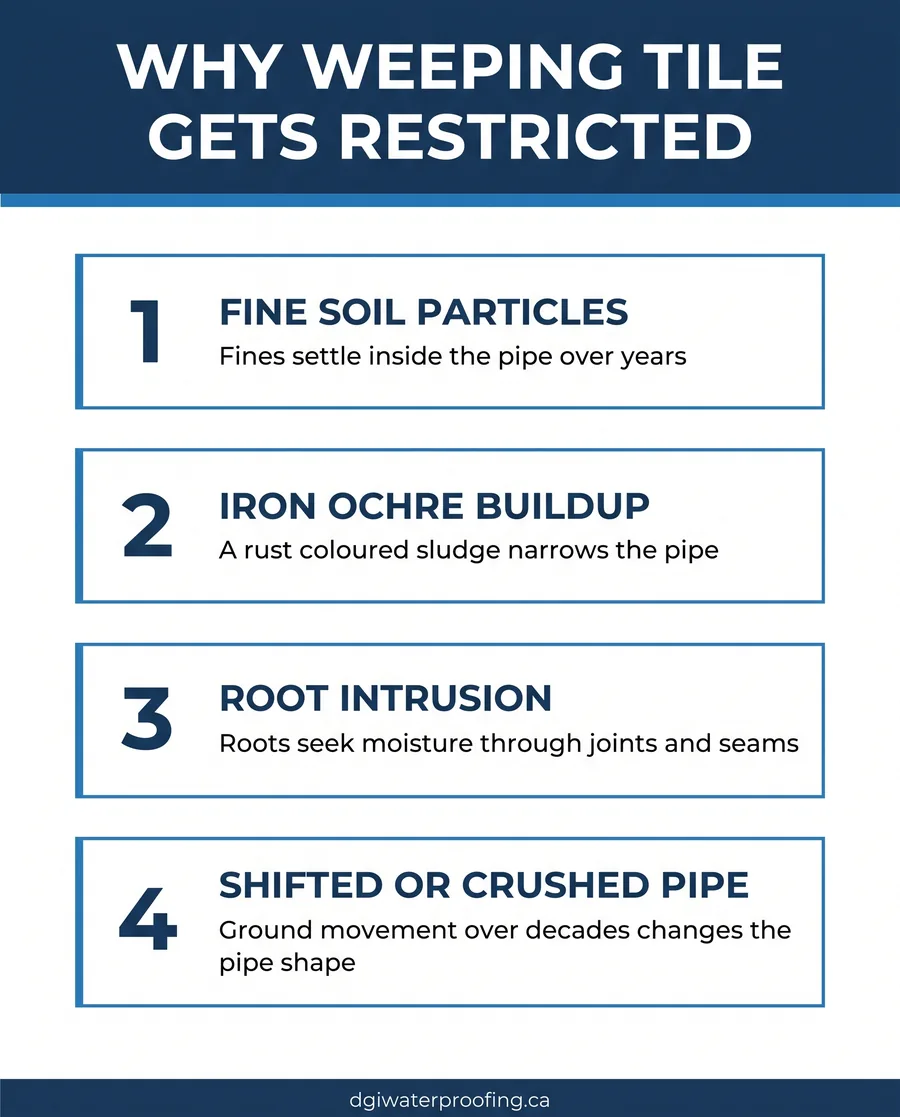
Fine soil particles, often called fines, migrate through the stone bed over years and settle inside the pipe. In parts of southern Ontario with iron-rich groundwater, bacteria can also form a rust-coloured sludge called iron ochre inside the pipe, which narrows the opening from the inside out. Tree roots looking for moisture find their way into older clay or unsealed joints, and in homes with a lot of clay soil, general ground movement can shift or crush a section of pipe over decades.
Foundations are generally expected to be graded and drained so water does not sit against them, a principle covered at a high level in Ontario's building code overview. Weeping tile is one part of meeting that expectation, alongside a broader basement waterproofing plan that accounts for grading, downspouts and the drainage layer together, since a clogged pipe rarely fails on its own for no reason.
What to do when you spot the symptoms
None of this requires digging up your yard to confirm. Start by writing down what you are seeing and when: which wall, how often the pump runs, whether the smell fades between rains or lingers. That record is exactly what a technician needs to figure out whether the clogged weeping tile symptoms you are seeing point to a partial clog, a collapsed section, or something else entirely, like surface grading pushing water toward the house instead of away from it.
Good to know
This article describes common warning signs in general terms, not a diagnosis of your foundation. The right response depends on your home's age, soil and drainage layout, and on how far along the symptoms already are. Confirm what applies to your property with a qualified waterproofing contractor before you commit to a repair, and check your home insurance policy wording directly with your insurer for what it does and does not cover.
Download the free quick guide
A printable room-by-room checklist for catching clogged weeping tile symptoms early, plus the questions worth asking before you book a repair.
Frequently asked questions
What exactly is weeping tile and where is it located?
Weeping tile is a perforated pipe set in a bed of stone that runs along the outside of your foundation footing, at the lowest point of the structure. Its job is to collect groundwater from the surrounding soil before it can build up pressure against the wall, then carry it to a sump pit, where a pump moves it away from the house. It sits below the basement floor, so it is not visible without excavating, which is exactly why the symptoms above matter so much for figuring out its condition without digging first.
How do I tell a clogged weeping tile from a system that is just old?
Age alone does not usually cause sudden symptoms. What tends to change is the pattern: a sump pump that used to cycle occasionally and now runs constantly, or a corner of the basement that stayed dry for years and suddenly does not. A genuinely old but still functional system typically keeps behaving the same way it always has. A shift in behaviour, especially one that lines up with a landscaping change, a heavy rain season, or nearby construction, points more toward a developing clog than ordinary age.
Can a clogged weeping tile be cleared, or does it need full replacement?
It depends on where the restriction is and how the pipe was installed. Some clogs can be addressed by flushing or jetting the line from an access point, particularly if the pipe itself is still intact. Where the pipe has collapsed, crushed, or corroded, clearing it does not solve the underlying problem, and replacement of that section is usually the more durable path. A technician typically needs to see the condition of the pipe, not just the symptoms, before recommending one approach over the other.
Does home insurance cover repairing a clogged weeping tile?
This varies a lot by policy and by insurer, and it is not something to assume either way. Some policies distinguish between sudden water damage and damage from gradual seepage or a maintenance issue like a clogged drainage system, and that distinction can affect what is covered. Our overview of insurance and basement waterproofing covers the general landscape, but the only reliable answer for your situation comes from your own policy wording and your insurer.
How urgent is it if I notice these symptoms heading into winter?
Symptoms rarely resolve on their own once the ground freezes, and a clog that is only mild in the fall can look worse by spring runoff. It is generally worth having a technician look before the ground is frozen solid, since diagnosing and, where needed, excavating around a foundation is far more workable before deep frost sets in. If you are already seeing standing water or a pump that cannot keep up, treat that as worth addressing now rather than waiting for spring.
If any of this sounds familiar, three things are worth doing this week:
- Log what you are seeing: the location, how often, and whether it tracks with rainfall.
- Check the sump pit and discharge line outside for obvious blockages or ice, especially going into colder months.
- Get a professional opinion before symptoms move from a damp patch to standing water.
DGI Waterproofing services basements across the GTA, and a technician can usually tell within one visit whether clogged weeping tile symptoms are behind what you are seeing or something else is feeding the same pattern. If you want a second opinion, request a basement moisture assessment and we will walk you through it.